Water is supposed to be forgettable. You turn on the tap, fill a glass, rinse a plate, take a shower, and carry on with your day. So when the water suddenly smells strange or looks different, it gets your attention pretty quickly.
Maybe there’s an earthy odor in the morning. Perhaps the water looks cloudy for a few seconds after the faucet starts. Or you’re reading about emerging contaminants and wondering whether something invisible could be present in your supply.
Not every unusual change means there’s a serious problem. Still, unusual water deserves a closer look. The smartest response is not to panic or immediately buy expensive equipment. Start by figuring out what changed and why.
An Unpleasant Smell Can Have Several Causes
Few things make people suspicious of their water faster than an unpleasant odor. Smelly water can come from several sources, and the smell itself can provide a useful clue.
A sulfur or rotten-egg-like odor may be associated with hydrogen sulfide. Musty or earthy smells can have different causes, while a swimming-pool-like odor may be related to disinfectants used in municipal water treatment.
Sometimes the issue isn’t the water supply at all. Drains, plumbing fixtures, water heaters, and stagnant water can create odors that seem like they’re coming directly from the tap.
That’s why it’s useful to check whether the smell occurs at every faucet or only one. Try running cold water for a minute and compare fixtures. If the odor is isolated to one location, the source may be local plumbing rather than the incoming supply.
If the smell is persistent or suddenly appears throughout the house, testing and professional evaluation are sensible next steps.
Cloudy Water Isn’t Always What It Seems
A glass of cloudy water can look alarming, but appearance alone doesn’t tell you what’s happening.
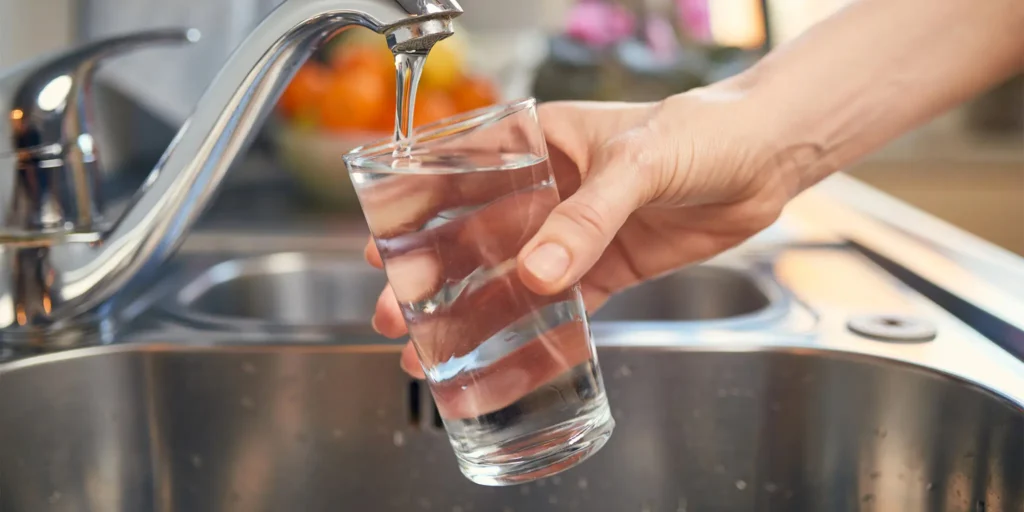
In some cases, cloudiness is caused by tiny air bubbles. Fill a clear glass and let it sit for a few minutes. If the water gradually clears from the bottom upward, trapped air may be responsible. This can happen when water pressure or temperature changes.
Other causes can include suspended particles, mineral precipitation, plumbing disturbances, or treatment issues.
The important thing is to notice whether the condition is temporary or persistent. Water that briefly appears cloudy and then clears is different from water that remains cloudy after standing.
If the appearance changes suddenly across the entire home, it’s worth investigating the water source, plumbing, and treatment equipment rather than assuming the cause.
Invisible Contaminants Need a Different Approach
Some water-quality concerns can’t be identified by looking at or smelling the water.
PFAS, commonly described as PFAS / forever chemicals, are a group of human-made substances that have been used in many industrial and consumer applications. Certain PFAS can persist in the environment for long periods, which is one reason they’ve received significant attention in water-quality discussions.
You can’t reliably detect PFAS by taste, color, or smell.
If PFAS are a concern in your area, the appropriate response begins with information. Check available water-quality data and consider laboratory testing when appropriate. Treatment should then be selected based on the specific substances and concentrations involved.
Some filtration technologies can reduce certain PFAS, but performance depends on the particular system, operating conditions, maintenance, and the compounds being targeted. Claims that a generic filter “removes everything” should be treated cautiously.
Your Water Source Changes the Conversation
The first question in any water-quality investigation should often be: where does the water come from?
Municipal water supplies are treated and monitored before distribution, although conditions can still vary as water travels through local infrastructure and household plumbing.
Private wells are different. Groundwater chemistry depends on local geology, well construction, surrounding land use, rainfall, and other factors. A well that produces clear, pleasant water today may have different characteristics months or years later.
For this reason, private well owners should consider periodic testing as part of normal home maintenance.
A neighbor’s treatment system can offer ideas, but it shouldn’t be treated as a prescription. Their well isn’t your well.
Don’t Let Appearance Become the Diagnosis
Humans naturally judge water by what we can see. That’s understandable. Nobody wants to drink something that looks unusual.
But appearance has limits.
Clear water isn’t automatically free of unwanted contaminants, just as cloudy water isn’t automatically dangerous. Odor can also be misleading. A strong smell may come from something relatively harmless, while some important water-quality concerns have no detectable odor at all.
Testing provides information that your senses simply can’t supply.
The type of test matters, too. A basic home test may provide useful screening information, while laboratory analysis may be necessary for specific contaminants.
If you’re concerned about a particular substance, make sure the testing method is designed to detect it.
Plumbing Can Be Part of the Problem
Sometimes homeowners focus so heavily on the water source that they forget the plumbing between the source and the faucet.
Older pipes can contribute particles, discoloration, metallic taste, or other changes. Water that sits in plumbing for long periods can also taste or smell different when the tap is first opened.
A simple comparison can be informative. Check multiple fixtures, including one that is rarely used and one that gets frequent use. Run the cold water and observe whether the appearance or odor changes after a short period.
If only one fixture has a problem, the issue may be closer to home than you think.
Treatment Should Match the Problem
Once you’ve identified the likely cause, treatment becomes much easier to discuss.
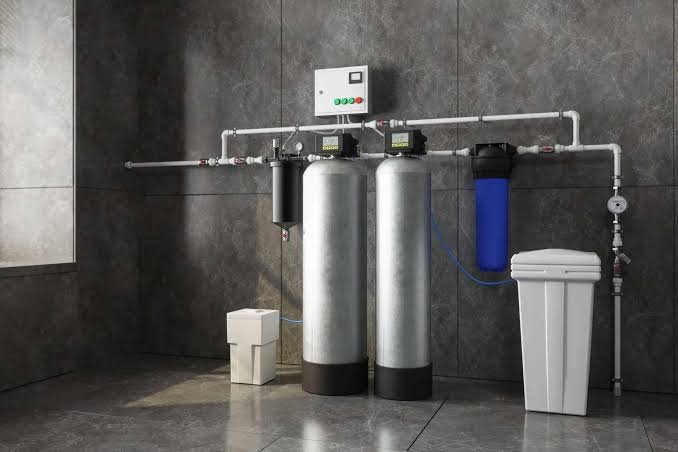
Carbon filtration may help with certain taste and odor concerns. Sediment filtration can capture physical particles. Water softeners are designed primarily for hardness. Reverse osmosis can provide more extensive treatment for certain dissolved substances at the point of use.
For some microbiological concerns, disinfection technologies may be appropriate.
There is no universal filter that handles every possible water-quality issue. That’s why water testing and proper system design matter so much.
The right equipment depends on the contaminant, concentration, water flow, household demand, and treatment goal.
Maintenance Is Part of Water Quality
Even a well-designed treatment system needs regular attention.
Filters have limited capacity. Carbon media eventually becomes exhausted. Reverse osmosis membranes require replacement. Disinfection equipment may need servicing. Storage tanks and other components can also require inspection.
A neglected system can perform very differently from the system described on the product label.
Keep track of maintenance dates and follow the manufacturer’s recommendations. If water quality changes after a long period of normal operation, don’t automatically assume the solution is simply a new filter.
The underlying water conditions may have changed.
When Should You Take a Closer Look?
A temporary change after local plumbing work may resolve itself. But persistent changes deserve more attention.
Consider investigating when you notice recurring odor, unusual color, persistent cloudiness, sudden changes in taste, visible particles, or other characteristics that weren’t present before.
If several fixtures change at once, look beyond a single faucet. If only one fixture is affected, inspect the local plumbing.
And if testing identifies a specific contaminant, choose treatment based on that result rather than relying on a broad marketing claim.
Better Water Starts With Better Questions
Unusual water can be unsettling, but the answer isn’t always complicated.
Ask what changed. Determine whether the issue affects one fixture or the entire home. Identify the water source. Test when appropriate. Then choose treatment designed for the actual problem.
Most importantly, don’t rely entirely on your senses. Taste, smell, and appearance are useful clues, but they aren’t complete water-quality tests.
The goal isn’t to make homeowners suspicious of every glass of tap water. It’s to encourage a calmer, more informed approach.
When water looks clear, smells normal, and behaves the way you expect, that’s reassuring. When something changes, investigate rather than guess.
Good water treatment isn’t about treating everything imaginable. It’s about understanding what’s there and doing something sensible about it.