Choosing a water treatment system sounds easy until you start looking at the options. Suddenly you’re comparing filters, softeners, conditioners, purification equipment, monitoring devices, and a pile of technical terms that weren’t part of your vocabulary last week.
It can be tempting to pick the system with the best reviews or the longest list of features. But water treatment isn’t really a one-size-fits-all purchase. What works beautifully in one home may do very little in another.
The reason is simple: water conditions vary. So do houses.
Before spending money on equipment, it helps to understand where your water comes from, what’s in it, and how it moves through your home. Those three details can tell you more than a glossy product brochure ever will.
Start With the Water Source
The first question should be surprisingly basic: where does your household water come from?
A municipal supply is managed differently from a private well. Public systems generally undergo treatment before water reaches the property, while well owners are responsible for monitoring and maintaining their own supply.
Understanding your water source provides important context when evaluating quality concerns.
A well may have naturally occurring minerals, iron, sediment, or other characteristics depending on local groundwater conditions. Municipal water can also have noticeable taste or odor characteristics, particularly because of treatment and disinfection processes.
Neither situation automatically means the water is bad. It simply means the starting point is different.
Water Chemistry Matters More Than Appearance
Clear water looks reassuring, but appearance doesn’t tell you everything.
Some dissolved substances are invisible. Hardness, for example, can be caused by calcium and magnesium that you won’t see floating in the glass. Other characteristics may only become obvious through taste, odor, staining, or gradual buildup.
That’s why understanding mineral content can be particularly useful when dealing with household water.
High mineral levels can contribute to scale on faucets, shower doors, and appliances. Certain minerals can also cause staining or affect taste.
Testing provides a clearer picture than simply looking at the water and guessing.
Hard Water Leaves Familiar Clues
If your shower glass constantly develops white spots or your faucet has a chalky ring around it, hard water may be part of the story.
Hardness is primarily associated with calcium and magnesium. These minerals aren’t necessarily a safety concern, but they can create plenty of practical headaches.
Soap may lather differently. Cleaning can take longer. Water heaters and other appliances may develop scale over time.
If hardness is confirmed as the issue, a suitable softening or conditioning approach can help. The important thing is to select equipment based on the actual hardness level and household demand.
Your Plumbing Can Change the Experience
Even if the incoming water is fine, the water that comes out of your faucet can be influenced by what’s happening inside the house.
Older pipes, corroded fittings, faucet components, and water heaters can all affect taste, appearance, or sediment levels.
That’s why your plumbing setup deserves consideration before you assume the treatment system is responsible for every problem.
For example, if strange-tasting water comes from only one faucet, replacing or cleaning the faucet aerator may be more appropriate than installing whole-house filtration.
Similarly, if an odor appears only with hot water, the water heater may deserve inspection.
Sometimes the simplest explanation is the right one.
Test Before You Treat
Water testing is one of the most useful steps homeowners can take when they aren’t sure what is happening.
Depending on the situation, testing can examine hardness, pH, iron, sediment, and other characteristics. Private well owners may have additional reasons to test regularly because groundwater conditions can change.
Testing doesn’t mean you need to search for every possible substance. The right analysis depends on the water source and the concern you’re trying to investigate.
Think of it as getting a diagnosis before buying a treatment plan.
It can save you from spending money on equipment that isn’t designed to address your actual problem.
Choose Treatment Around the Problem
Different technologies perform different jobs.
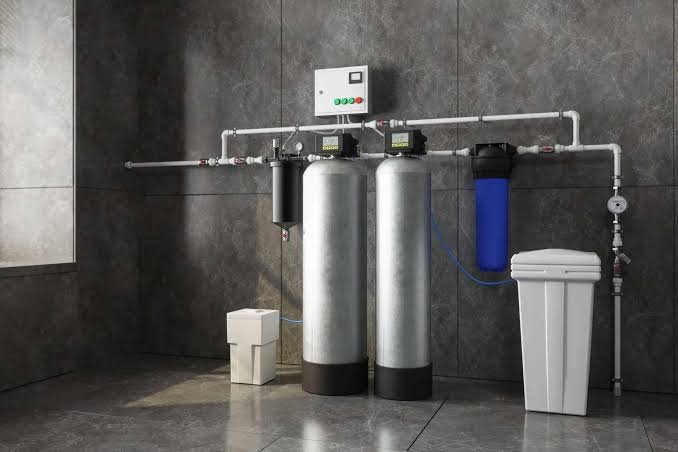
Sediment filters are intended to capture particles. Carbon filtration is commonly used for certain taste and odor concerns. Water softeners address hardness through ion exchange. Other systems are designed for specific water-quality challenges.
This distinction matters.
A filter that works well for sediment isn’t necessarily going to solve hard water. A softener isn’t automatically a complete drinking-water purifier.
Before purchasing anything, ask what the equipment is designed to remove or reduce and whether that matches your test results.
If the answer isn’t clear, keep asking questions.
Think About the Whole Household
Water treatment needs to fit the way people actually live.
A two-person household with one bathroom has different water demands from a family of six with several bathrooms and water-using appliances running throughout the day.
Peak demand matters because treatment equipment has to maintain adequate flow when multiple fixtures operate at once.
Think about mornings. Someone showers, another person starts the washing machine, and someone else fills the coffee maker. That’s when an undersized system can reveal itself.
Correct sizing is usually more important than buying the largest system available.
Installation Location Matters
A treatment system needs an appropriate place to live.
There should be enough room for connections, drainage, controls, and future service. Filters need to be accessible, and valves shouldn’t be hidden behind equipment or storage.
It may seem like a minor detail while you’re planning the installation, but accessibility becomes very important when it’s time to change a filter or inspect a connection.
Good planning considers tomorrow, not just installation day.
Maintenance Is Part of Ownership
Water treatment equipment needs care.
Filters eventually need replacement. Tanks and valves may require inspection. Certain systems need cleaning, sanitation, or adjustments.
The easiest way to stay ahead is to keep a simple schedule.
Write down when filters were changed. Note service visits. Pay attention to unusual noises, leaks, pressure changes, or differences in taste and odor.
Don’t wait for the system to fail completely before checking it.
Routine maintenance can help preserve performance and may catch developing problems while they’re still relatively simple.
Think About Long-Term Costs
A treatment system’s price tag doesn’t tell the whole story.
Consider replacement filters, consumables, electricity, service, repairs, and expected equipment life. A lower-cost system may be attractive initially but less economical if its components need frequent replacement.
Ask about ongoing costs before committing.
It’s also worth finding out whether replacement parts are readily available and whether local service is offered.
A system that’s easy to own is often more valuable than one that looks impressive but becomes difficult to maintain.
Don’t Let Features Make the Decision
Modern treatment systems can come with smart controls, digital displays, alerts, and other technology.
Some features are genuinely useful. Others may not matter much to your household.
Ask what each feature actually does. Does it simplify maintenance? Help detect unusual water use? Improve control? Protect the equipment?
If the answer is useful, great. If not, don’t feel pressured to pay for it.
The most advanced system isn’t automatically the best system.
Let Your Home Guide the Decision
Choosing water treatment becomes much easier when you stop looking for a universal solution.
Start with the water source. Understand the mineral content and other relevant characteristics. Consider your plumbing setup, household size, water demand, and the problems you’re actually experiencing.
Then choose treatment that has a clear purpose.
That approach may not sound particularly flashy, but it works. You aren’t buying equipment because a salesperson says you need it or because your neighbor has the same model. You’re choosing based on information.
And in the end, that’s what good water treatment is really about.
Not having the most complicated setup. Not owning the newest equipment.
Just having water that works better for your home, your plumbing, and the people who use it every day.