Most of us have a pretty simple relationship with water. Turn on the faucet, fill a glass, and drink. There’s no reason to overthink it on a normal Tuesday morning when you’re already late for work.
But water can carry characteristics you can’t see, smell, or taste. Its quality depends on where it comes from, how it’s treated, the condition of the plumbing, and the environment around the source. Sometimes the issue is simply unpleasant taste. Other times, testing may reveal something that deserves a more specific treatment approach.
That’s why understanding the basics of water quality is useful. You don’t need to become a chemist. You just need to know what questions to ask before choosing a filtration system.
Water Quality Starts With the Source
The water entering your home may come from a municipal supply, private well, rural system, or another source. Each has its own characteristics.
Public supplies are generally treated and monitored, while private wells can be influenced by local geology, land use, weather, and well conditions. Even water that looks perfectly clear can contain dissolved substances that aren’t visible to the naked eye.
For homeowners, this means one thing: don’t assume your neighbor’s water treatment solution will work for you.
Two houses on the same street can experience different water conditions because of plumbing, equipment, or source variations. Testing is the more reliable starting point.
Microorganisms Are One Reason Water Is Treated
When people hear the word contamination, they often imagine something dramatic. In reality, microorganisms can enter water through several pathways, particularly when source protection or well conditions aren’t adequate.
Certain types of bacteria can cause illness when present at unsafe levels. That’s one reason testing can be important for private wells, especially after flooding, repairs, or other events that could affect the water source.
Treatment for microorganisms isn’t necessarily the same as treatment for minerals or sediment.
Depending on the situation, methods such as ultraviolet disinfection, chlorination, or other professionally selected approaches may be considered. The right option depends on the source, the organism involved, and the overall water chemistry.
A filter designed to improve taste shouldn’t automatically be assumed to provide microbiological disinfection.
Some Substances Are Difficult to Detect
One frustrating thing about water quality is that appearance doesn’t tell you everything.
A glass can look crystal clear while containing dissolved substances. Some have noticeable tastes or odors, but others don’t.
This is particularly important when considering environmental pollutants or toxic chemicals. Potential sources can include industrial activity, agricultural practices, fuel storage, improper waste disposal, and other local conditions.
If there is a reason to suspect a specific chemical contaminant, targeted laboratory testing is much more useful than guessing based on appearance.
And if testing identifies a concern, treatment should be selected specifically for that substance. A generic filter may not be capable of reducing every contaminant.
Don’t Rely on Taste Alone
Taste is probably the most common reason people start thinking about filtration.
Maybe the water tastes strongly of chlorine. Maybe it has a metallic flavor. Perhaps there’s an earthy smell that makes you reach for bottled water instead.
These changes are worth investigating, but taste alone can’t tell you whether water is safe.
Carbon filtration can improve certain taste and odor issues, while other water-quality concerns require different technologies.
In other words, your taste buds can raise a question, but they can’t provide the final answer.
Drinking Water Deserves Practical Attention
Most homeowners don’t need to treat every gallon of water in the same way.
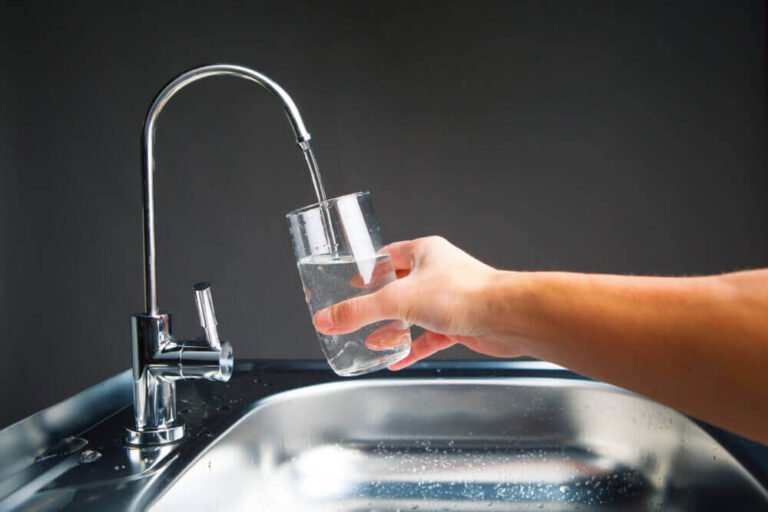
If your main concern is what you drink and cook with, a point-of-use filtration system can provide targeted treatment at the kitchen sink. Depending on the water analysis, this might involve carbon filtration, reverse osmosis, or another appropriate technology.
This kind of setup can serve as a convenient drinking and cooking solution without requiring specialized treatment throughout the entire plumbing system.
However, if the water has problems that affect bathing, laundry, appliances, or multiple fixtures, whole-house treatment may be worth considering.
Know the Difference Between Filtration and Disinfection
The terms “filtration” and “disinfection” are sometimes used as though they mean the same thing. They don’t.
Filtration generally refers to removing or reducing particles or specific substances from water. Disinfection is intended to inactivate or destroy microorganisms.
A sediment filter, for instance, can capture particles but shouldn’t automatically be considered a disinfecting device.
Similarly, a carbon filter may improve taste and odor without being designed to eliminate every microbiological concern.
Understanding that distinction can prevent homeowners from expecting equipment to perform a job it wasn’t designed to do.
Private Well Owners Should Stay Curious
If your home relies on a private well, regular attention to water quality is particularly important.
Groundwater conditions can change because of heavy rainfall, flooding, nearby construction, agricultural activity, or changes in the well itself.
Testing recommendations vary by location and circumstances, but homeowners should understand which tests are appropriate for their source and situation.
Don’t wait for the water to become visibly dirty.
Some changes may be obvious, while others won’t be noticeable without laboratory analysis.
Water Treatment Should Follow Testing
The temptation to buy a filtration system first is understandable. Online shopping makes it incredibly easy to find products promising cleaner, healthier, better-tasting water in a few clicks.
But treatment works best when you know what you’re trying to remove.
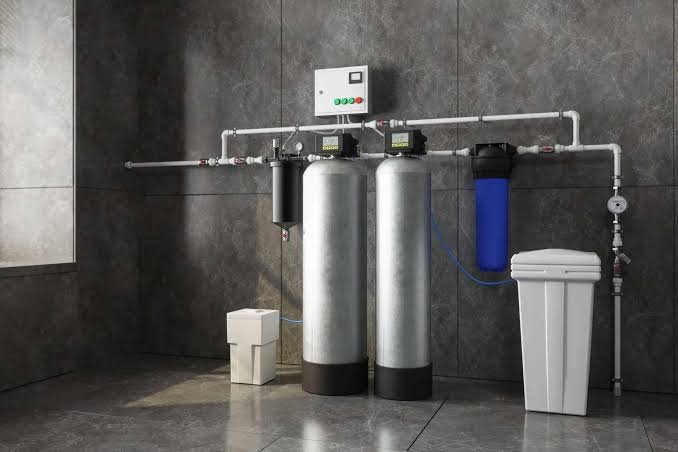
If hardness is the concern, a softener may be appropriate. If chlorine taste is the issue, carbon filtration may help. If dissolved substances are identified, reverse osmosis or another specialized technology might be considered.
And if microorganisms or specific chemicals are detected, treatment should be selected based on those findings.
One system doesn’t necessarily solve every problem.
Maintenance Can’t Be Ignored
Installing a treatment system is only the beginning.
Filters need replacement. UV lamps may need servicing. Reverse osmosis membranes eventually require replacement. Other equipment may require cleaning, salt, media replacement, or periodic inspection.
A system that isn’t maintained can gradually lose effectiveness.
Keep a record of when filters were installed and replaced. Follow the manufacturer’s instructions, and pay attention if the water’s taste, smell, pressure, or appearance changes.
Maintenance isn’t exciting, but neither is discovering an overdue filter when you need the system most.
Choose Technology That Fits Your Home
Water treatment should fit your actual lifestyle.
A small household with moderate water use may have different needs from a large family. A private well has different considerations from a municipal supply. Someone primarily concerned about drinking water may need a different setup from a homeowner dealing with scale throughout the plumbing.
Consider water demand, installation space, maintenance, replacement costs, and available service.
The cheapest system isn’t always the most economical over time, and the most complicated system isn’t automatically the best.
Ask Better Questions Before You Buy
When speaking with a water-treatment provider, don’t be afraid to ask straightforward questions.
What did the water test show? What does this system remove? What doesn’t it remove? How often do the filters need changing? What does maintenance cost? What happens if water conditions change?
A trustworthy professional should be comfortable explaining these details.
You don’t need a sales pitch. You need information you can understand.
Better Water Starts With Understanding
Water treatment can sound complicated when you first encounter all the different filters, membranes, tanks, and treatment technologies. But the basic approach is actually quite simple.
Know the source. Test the water. Identify the concern. Choose treatment designed for that concern. Then maintain the system properly.
Most importantly, don’t judge water quality by appearance alone.
A clear glass doesn’t tell the whole story, and an unpleasant taste doesn’t automatically mean something is dangerous. Testing provides the information your senses can’t.
Once you approach water treatment that way, the process becomes less about buying the latest equipment and more about making a thoughtful decision for your home.
And that’s ultimately what good water treatment should be: practical, evidence-based, and quietly useful every day.