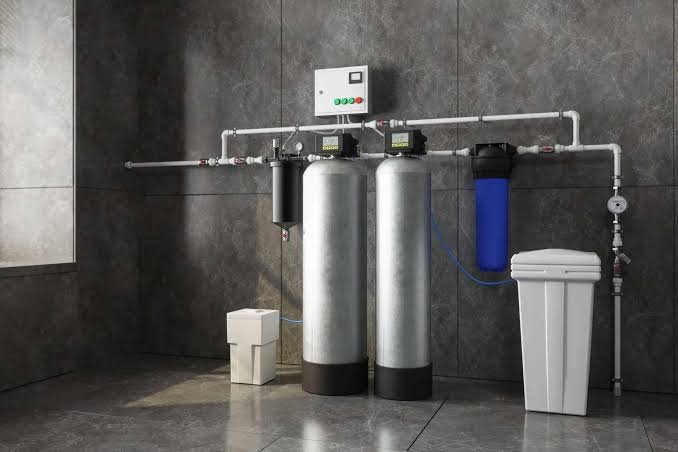
Most homeowners don’t think much about their water treatment equipment when everything is working. That’s understandable. A filtration system isn’t exactly the kind of thing you admire on a quiet Sunday afternoon. It sits in the utility area, under the sink, or near the plumbing and quietly does its job.
But “out of sight, out of mind” can become expensive when maintenance gets forgotten.
A filter that should have been replaced months ago can affect water flow. A softener that isn’t regenerating properly can allow hard-water scale to return. An aging system may still operate, but not nearly as efficiently as it once did.
The good news is that keeping water treatment equipment in decent shape doesn’t have to be complicated. A few sensible habits, done consistently, can make a surprisingly big difference.
Pay Attention to Changes in Water Quality
Your water often gives you early warning signs before the equipment gives up completely.
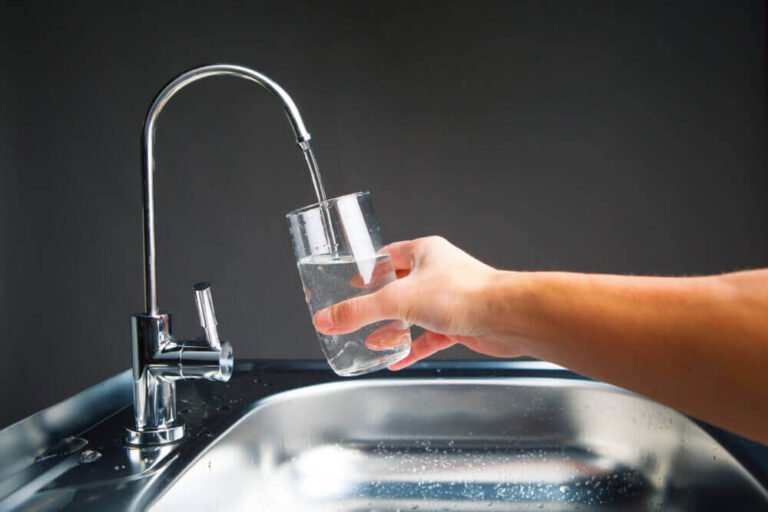
Maybe the water starts tasting different. Perhaps an unpleasant smell returns. You notice more scale around faucets or a thin stream coming from the filtered kitchen tap.
Don’t automatically dismiss these changes.
A shift in taste or flow can have a simple explanation, such as an exhausted cartridge, but it can also point toward another issue with the treatment system or incoming water.
The important thing is to notice the change and investigate rather than letting it become the new normal.
Filters Don’t Last Forever
This one seems obvious, yet it’s probably the easiest maintenance task to forget.
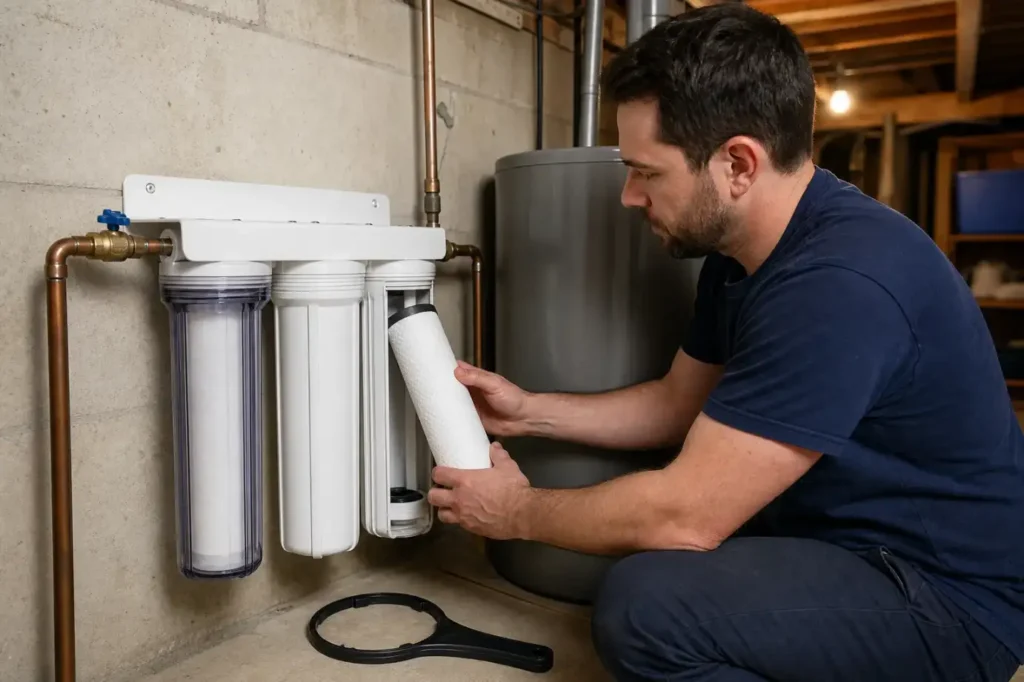
filter replacement should happen according to the manufacturer’s recommendations and the actual conditions of the water. Filter life can vary considerably depending on household consumption and the amount of sediment or other material entering the system.
A small household may get much longer service from a cartridge than a busy family using several hundred gallons a day.
Don’t rely solely on memory. Put the installation date somewhere visible or set a reminder on your phone. Future-you will be grateful.
And if a filter becomes clogged before its expected replacement date, don’t assume the manufacturer’s schedule is wrong. It may simply mean your incoming water contains more material than expected.
Prevent Problems Instead of Chasing Them
There’s a certain satisfaction in fixing something only when it breaks. You deal with the problem, replace the failed part, and move on.
Unfortunately, that approach isn’t always kind to your wallet.
preventative maintenance is about finding small problems before they become expensive failures. It might involve checking fittings for leaks, inspecting filter housings, reviewing system settings, cleaning components, or confirming that the equipment is operating normally.
The exact tasks depend on the type of system.
The principle, though, is simple: don’t wait for a complete failure if there are obvious signs that something isn’t right.
Your Water Softener Needs Attention Too
Water softeners can quietly operate for years, but they aren’t maintenance-free.
Check salt levels as recommended for your system, but don’t assume adding salt is the only task that matters. The brine tank, control valve, resin bed, injector, and other components all contribute to proper operation.
If hard-water scale starts appearing again on shower doors or faucets, that’s a reason to investigate.
Sometimes the problem is a setting. Sometimes it’s regeneration. Sometimes a component needs service.
Testing the water’s hardness can also help confirm whether the softener is still doing its job instead of relying entirely on appearances.
Reverse Osmosis Systems Need Routine Care
Under-sink reverse osmosis systems are particularly easy to forget because they’re hidden inside a cabinet.
They still need attention.
Pre-filters and post-filters have service lives, while the reverse osmosis membrane also needs replacement eventually. Storage tanks may require inspection, and connections should be checked for leaks.
If the filtered faucet begins producing water much more slowly than usual, something may be restricting the system.
Don’t automatically replace every component. Start with basic troubleshooting and work through the likely causes.
Water Pressure Can Tell You Something
A sudden change in water pressure can be frustrating, particularly when you’re standing in the shower and wondering where all the water went.
Treatment equipment can contribute to pressure loss if filters become clogged or if a system is incorrectly sized.
But pressure problems can also originate elsewhere in the plumbing.
If replacing an overdue filter doesn’t restore normal flow, look deeper. Incoming pressure, valves, tubing, and other plumbing components may need inspection.
It’s better to diagnose the restriction than to keep replacing filters that aren’t actually causing the problem.
Leaks Are Small Until They’re Not
Water has a talent for finding places where it shouldn’t be.
A slow leak around a filter housing or fitting might seem harmless. Over time, however, even a small amount of water can damage cabinetry, flooring, or nearby materials.
Check around treatment equipment occasionally. Look for damp spots, mineral deposits, corrosion, or water marks.
If you discover a leak, identify the source before tightening or removing components. Some systems operate under pressure, so careless handling can turn a small drip into a much bigger mess.
Know When Your System Has Become Outdated
Water treatment technology changes over time. A system that was perfectly reasonable ten years ago may not be the most efficient choice today.
That doesn’t mean you need to replace functioning equipment just because something newer exists.
However, if your system requires increasingly frequent repairs, uses outdated components, has poor efficiency, or no longer addresses your water-quality needs, it’s worth evaluating.
Modern system upgrades may improve capacity, convenience, monitoring, efficiency, or treatment performance.
An upgrade should have a reason behind it. “Newer” isn’t enough.
Keep Track of Maintenance
A simple maintenance record can make water treatment much easier to manage.
Write down filter changes, service visits, repairs, water-testing results, and major component replacements. You don’t need a spreadsheet with twelve tabs. A note on your phone will do.
This information becomes especially useful when troubleshooting.
If you notice that a filter normally lasts six months but recently lasts only two, that’s worth investigating. If water quality changed shortly after a plumbing repair, that detail may also matter.
Small records can reveal patterns that are otherwise easy to miss.
Test the Water When Something Changes
Maintenance isn’t only about mechanical parts.
If the water’s taste, odor, color, or appearance changes unexpectedly, consider testing the water rather than assuming the treatment equipment is responsible.
For private wells, periodic testing can be particularly valuable because groundwater conditions can change.
For municipal supplies, a sudden change may have a different explanation, including changes in treatment or local plumbing work.
Testing doesn’t need to happen every time you notice a tiny difference, but persistent or significant changes deserve attention.
Don’t Overcomplicate the Routine
The best maintenance routine is one you’ll actually follow.
Replace filters on schedule. Check for leaks. Watch water pressure. Keep an eye on salt levels if you use a softener. Service reverse osmosis equipment as recommended. Test the water when there is a meaningful reason to do so.
That’s enough to start.
You don’t need to become a water-treatment technician to take reasonable care of your system.
Small Habits Protect a Bigger Investment
Water treatment equipment is designed to make life easier, but it still depends on basic care.
A missed filter change may lead to poor flow. A neglected leak may damage a cabinet. An ignored performance issue may eventually require a larger repair.
None of these problems has to happen simply because the equipment is aging.
Pay attention, keep a few records, follow maintenance recommendations, and don’t hesitate to have unusual problems checked when you’re unsure about the cause.
In the end, good maintenance isn’t about constantly thinking about your water system. It’s almost the opposite.
You take care of the small things so the system can stay in the background where it belongs—quietly treating your water while you get on with the rest of your life.