Water is easy to take for granted. You turn on the kitchen faucet, fill a glass, start the coffee maker, and move on with your morning. Most of the time, nobody gives the water much thought.
Then the little things start adding up.
Maybe your shower doors develop cloudy spots. Your kettle has a stubborn layer of scale. The water tastes slightly different than it used to, or there’s an odor you can’t quite explain. You might even find yourself buying bottled water more often because the tap water just doesn’t taste the way you want it to.
For Nashville homeowners, these everyday concerns can lead to plenty of questions about filtration, softening, and drinking-water treatment.
The good news is that choosing a system doesn’t have to be complicated. Start by understanding your water, identify the problem you’re actually trying to solve, and then choose equipment around that information.
Start With the Water in Your Home
Before shopping for a filtration system, pay attention to what your water is doing.
Hardness can leave mineral scale on fixtures and appliances. Sediment may affect clarity or clog filters. Chlorine can influence taste and odor. Other water-quality concerns may require specialized treatment.
This is where water filtration in Nashville becomes less about buying a popular product and more about matching treatment to local household conditions.
Two homes a few streets apart can have different concerns depending on plumbing, water source, household usage, and existing equipment. That’s why copying your neighbor’s setup isn’t always the best strategy.
Testing gives you a much better starting point.
Hard Water Is Mostly a Household Nuisance
Hard water contains dissolved minerals, particularly calcium and magnesium. It isn’t necessarily something homeowners need to fear, but it can certainly be annoying.
Those minerals can leave spots on dishes, buildup around faucets, and scale inside water-using appliances. Soap may also seem less effective, which can make showers and cleaning feel like more work than they should.
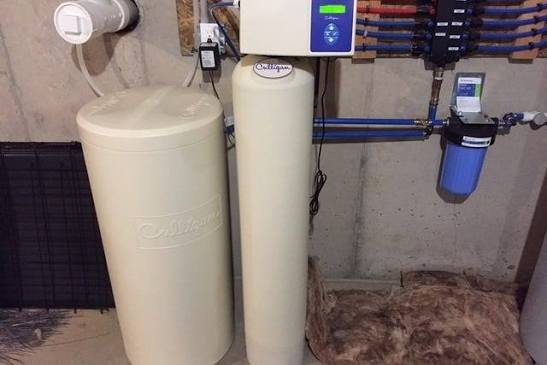
If hardness is your main issue, a water softener may be more appropriate than a basic drinking-water filter.
A softener is designed specifically to address hardness, while many conventional filters focus on sediment, taste, odor, or other contaminants.
That distinction is worth remembering when you’re comparing equipment.
Why Some Homes Choose Reverse Osmosis
If your main concern is drinking and cooking water, reverse osmosis is another option worth understanding.
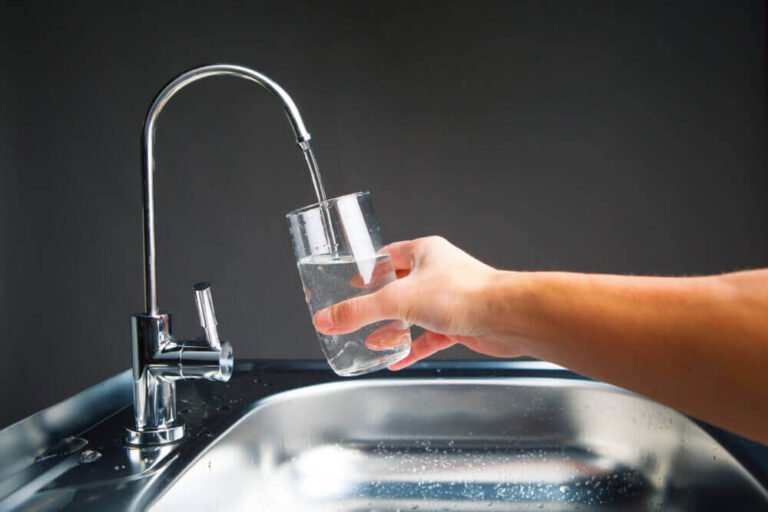
Reverse osmosis systems in Nashville can provide point-of-use treatment by pushing water through a semipermeable membrane under pressure. Many systems combine the membrane with sediment and carbon filtration stages.
The result can be a significant reduction in many dissolved substances, depending on the specific system and its certification.
These systems are often installed beneath the kitchen sink, making them a practical choice for households that don’t necessarily need every gallon of water in the house treated to the same degree.
There are trade-offs, though. Reverse osmosis systems need filter and membrane replacement, and many designs produce some wastewater during operation.
In other words, don’t choose one simply because it sounds more advanced.
Choose it because it addresses a problem you actually have.
Whole-Home Filtration Has a Different Purpose
Sometimes the issue isn’t limited to the kitchen faucet.
If you notice sediment, unpleasant taste, or other water-quality concerns at several fixtures, whole-home treatment may be worth considering.
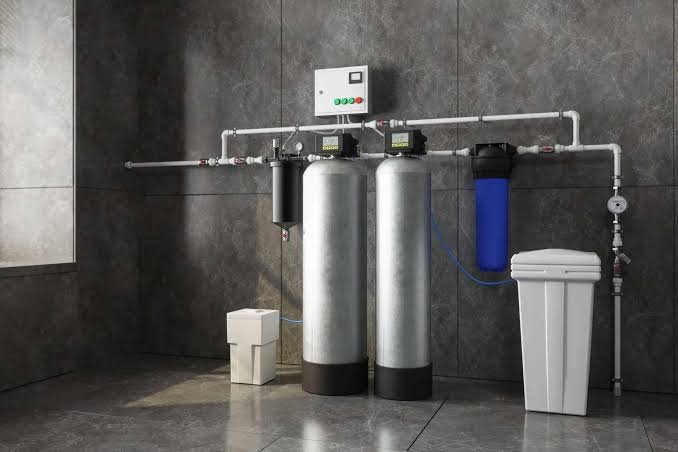
A whole-house system treats water as it enters the property, allowing treated water to reach showers, sinks, laundry areas, and other fixtures.
That can be especially appealing if you’re trying to improve the overall household water experience rather than focusing solely on drinking water.
But larger equipment comes with larger considerations: installation space, flow requirements, replacement filters, and ongoing maintenance.
Bigger isn’t automatically better.
A Free Water Test Can Be a Useful Starting Point
When homeowners don’t know what’s causing a water problem, testing can remove some of the guesswork.
A free water test offered by a reputable provider may provide basic information about hardness and other measurable characteristics. It can help you understand whether your main concern is mineral content, pH, chlorine, or something else the test is designed to evaluate.
Just ask what the test actually includes.
“Free” doesn’t mean comprehensive. A basic screening isn’t the same thing as a laboratory analysis capable of detecting every possible contaminant.
If you’re concerned about drinking-water safety or a specific substance, consider an appropriate certified laboratory test rather than relying solely on a sales-oriented screening.
The useful test is the one that answers your actual question.
Don’t Forget About Water Pressure
A filtration system can only work comfortably when it’s properly sized for the household.
If a whole-home filter is too restrictive, you may notice a drop in pressure when multiple fixtures operate at once. That’s not exactly the improvement most people have in mind.
Look at the system’s rated flow and compare it with your household’s typical demand.
A larger family with several bathrooms will have different requirements from a small apartment. Peak demand matters, too. Think about what happens when someone is showering while the dishwasher and washing machine are running.
Those ordinary moments are where poor sizing becomes obvious.
Maintenance Is Part of the Investment
Buying water treatment equipment is not the end of the process.
Filters eventually become saturated. Reverse osmosis membranes require replacement. Water softeners need salt or other servicing depending on their design. Valves, tanks, fittings, and controls may also need occasional attention.
Before purchasing anything, find out what maintenance looks like.
Ask how often filters should be replaced, what replacement cartridges cost, whether parts are readily available, and whether professional service is recommended.
A system with a low purchase price can become surprisingly expensive if replacement components are difficult to find or require frequent servicing.
Think beyond the day of installation.
Consider Your Appliances
Water treatment isn’t only about making drinking water taste better.
Hard water and scale can affect water heaters, coffee machines, dishwashers, washing machines, faucets, and showerheads. If mineral buildup is widespread, reducing hardness may make cleaning and appliance maintenance easier.
Still, avoid assuming every appliance problem comes from water quality.
A poorly performing water heater, for example, may have a mechanical or electrical problem unrelated to filtration.
Good diagnosis comes before buying equipment.
Ask What Each Treatment Stage Does
Modern treatment systems can include several technologies, and the terminology can get confusing quickly.
Sediment filters remove particles. Carbon filters can improve taste and odor and reduce certain substances. Softening targets hardness minerals. Reverse osmosis addresses a broader range of dissolved substances.
Each technology has a purpose.
When someone recommends a multi-stage system, ask what each stage is intended to accomplish and why your water needs it.
If the explanation is clear and specific, that’s a good sign.
If the answer is essentially, “You need all of this because it’s the best,” slow down and ask more questions.
Local Conditions Matter, But So Does Your House
It’s reasonable to research Nashville water quality and common local concerns, but don’t stop there.
Your own plumbing, water source, property age, household size, and existing treatment equipment all matter.
A home with older plumbing may have different concerns from a newly constructed property. A household using a private well has a different testing routine from one connected to a municipal supply.
The goal isn’t to find the most popular solution in the area.
It’s to find the solution that makes sense for your specific water.
Choosing With a Little Patience Pays Off
Water treatment can feel complicated because there are so many products competing for attention.
Try not to let the marketing rush you.
Start with testing. Identify the actual problem. Decide whether you need point-of-use or whole-home treatment. Consider flow rate, installation, maintenance, replacement parts, and long-term operating costs.
Then compare systems based on what they are designed to accomplish.
The best setup isn’t necessarily the most expensive one, and it isn’t always the one with the longest list of features.
It’s the system that quietly solves the water problem you were trying to solve in the first place.
Once that’s taken care of, you can get back to the ordinary stuff — making coffee, taking a long shower, filling a glass from the tap — without wondering quite so much about what’s happening behind the scenes.