Most of us don’t think much about water when everything is working as it should. Turn the faucet, fill the glass, rinse the vegetables, take a shower. It’s just there.
But water can leave little reminders of itself around the house. White marks on the showerhead. Spots on freshly washed glasses. A faint taste in the morning coffee that wasn’t there before. Sometimes there’s an odor, too, and once you notice it, it’s hard to ignore.
Those everyday details are often what make homeowners start looking more closely at their water quality.
The tricky part is that “better water” means different things to different people. One household may be frustrated by hard-water scale. Another may care mostly about drinking-water taste. Someone with well water may have entirely different concerns.
So rather than chasing a universal solution, it makes more sense to understand what your water needs and choose treatment accordingly.
Start With What You Know
Before buying equipment, pay attention to the signs your water is giving you.
Does it leave mineral deposits? Does it have an unusual smell? Is there visible sediment? Does laundry feel different after washing? Are certain fixtures developing buildup faster than expected?
These observations don’t provide a complete diagnosis, but they’re useful clues.
Water testing can add another layer of information. Depending on the water source and the concerns involved, testing may evaluate hardness, pH, iron, chlorine, dissolved solids and other characteristics.
The point isn’t to collect a giant list of numbers. It’s to understand what you’re actually dealing with.
After all, it’s difficult to choose the right treatment when you don’t know the problem you’re trying to solve.
Clean Water Is About More Than Appearance
Clear water can look reassuring. A sparkling glass certainly feels like proof that everything is fine.
But water quality isn’t always visible.
Dissolved minerals and other substances may be present without changing the water’s appearance. On the other hand, visible particles don’t necessarily tell you exactly what they are or whether a particular treatment method will remove them.
This is why clean water should be thought of in terms of quality and suitability, not simply appearance.
A properly selected filtration system can target specific concerns, but its effectiveness depends on the technology, the incoming water and the condition of the equipment.
Hard Water Can Make Simple Chores Annoying
Hard water is one of those problems that rarely feels urgent. Instead, it becomes a collection of small annoyances.
You wipe down the shower glass and see the spots again two days later. You clean a faucet, then notice white buildup around the aerator. Glassware may come out of the dishwasher looking less than perfect.
The minerals primarily responsible for hardness are calcium and magnesium.
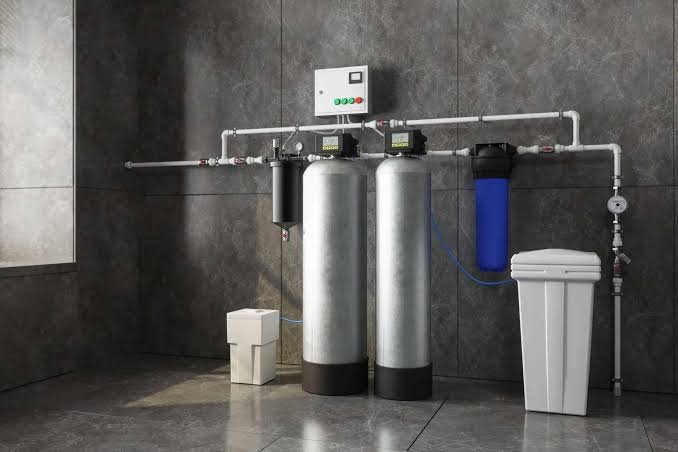
When homeowners consider water softening, they’re generally trying to reduce the effects of those minerals. Traditional water softeners use ion exchange to reduce hardness in treated water.
For a household with significant hardness, this can make a noticeable difference in cleaning, fixtures and certain appliances.
But if the water isn’t particularly hard, installing a softener may not be necessary. Again, the water should guide the decision.
Drinking Water Has Its Own Priorities
The water used for showering doesn’t necessarily need the same treatment as the water you drink.
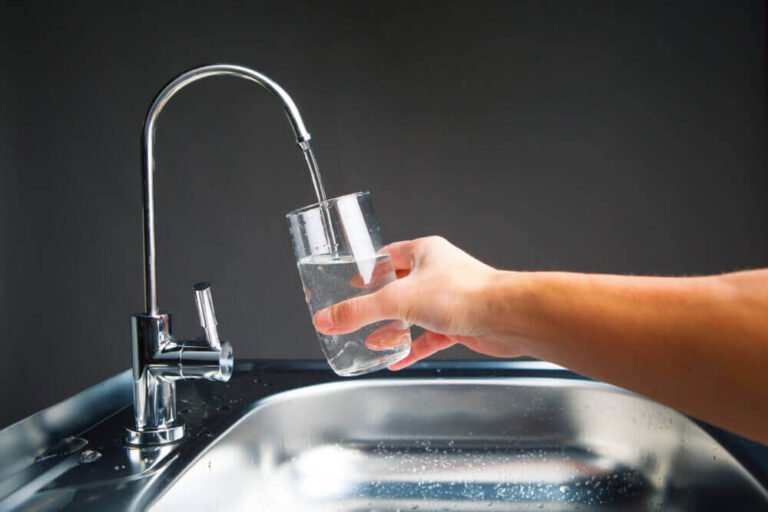
Some homeowners are perfectly satisfied with their household water but want additional treatment at the kitchen faucet. That’s where point-of-use systems can make sense.
Depending on the concern, options may include carbon filtration or reverse osmosis.
The important thing is to match the technology to the goal. If taste and odor are the main concerns, one approach may be appropriate. If you’re trying to reduce particular dissolved substances, another technology may be better suited.
When researching equipment, look for specific performance information rather than broad promises.
What Does “Pure Water” Actually Mean?
The phrase pure water sounds appealing, but it’s worth asking what it means in practical terms.
No treatment method removes everything from water, and not every substance needs to be removed in the first place.
For drinking water, the goal is generally to address identified quality concerns while preserving an appropriate mineral balance and making the water suitable for its intended use.
Reverse osmosis, for example, can reduce many dissolved substances, but it also requires proper maintenance and produces a concentrated reject stream.
The lesson is simple: don’t choose technology because a label sounds impressive. Choose it because the technology is appropriate for the water you’re treating.
Whole-Home or Point-of-Use?
This is another decision that depends heavily on the problem.
If sediment or certain taste and odor concerns affect water throughout the house, whole-home treatment may be worth considering. It treats water before it reaches multiple fixtures.
If the primary concern is drinking and cooking water, a point-of-use system may be more practical and less expensive.
Neither approach is automatically better.
Consider where the problem exists and where you want the improvement to happen.
Household Size Matters
Water treatment equipment needs to keep pace with actual water use.
A two-person household doesn’t necessarily have the same requirements as a family of six. Peak demand matters, too. A busy morning can mean multiple showers, toilets, faucets and appliances using water within a short period.
An undersized system may struggle with flow or treatment performance. An oversized system can cost more than necessary.
Before installation, consider the number of occupants, typical water usage and periods of peak demand.
It’s a boring calculation, perhaps, but a useful one.
Your Water Heater Deserves Some Attention
Water quality doesn’t stop at the faucet.
Hard water can contribute to mineral scale in water-heating equipment. Sediment can also accumulate under certain conditions.
Because water heaters regularly heat household water, they’re one of the appliances where water chemistry can become especially relevant.
That doesn’t mean water treatment will eliminate every water-heater problem. Maintenance still matters. Components wear out, tanks age and sediment can build up.
But addressing a known water-quality concern can be one part of a broader effort to care for household plumbing and appliances.
Maintenance Is Where Good Intentions Usually Get Tested
Installing treatment equipment is one thing. Remembering to maintain it is another.
Filters eventually need changing. Softener components need attention. Reverse osmosis membranes have service lives. Connections and valves should occasionally be inspected.
A treatment system that isn’t maintained may gradually become less effective.
The easiest solution is to keep things simple. Put replacement dates on your calendar. Save the equipment manual. Know which parts need regular attention.
If professional service is recommended, don’t ignore it simply because the system still appears to be working.
Water treatment tends to decline quietly. You may not notice the difference until the performance has already changed considerably.
Don’t Overcomplicate the Decision
There’s a temptation to believe that more equipment equals better water.
It doesn’t.
A system should be designed around the actual water-quality concerns, household demand and desired results. Adding unnecessary treatment can increase installation and maintenance costs without providing meaningful benefits.
Instead, ask practical questions.
What problem are we solving? What technology addresses that problem? How often does the system need service? What are the ongoing costs? Is the equipment appropriately sized?
Those answers are much more valuable than a long list of impressive features.
Better Water Should Make Life Easier
The real measure of a successful water treatment system isn’t how complicated it looks in the utility room.
It’s how little you have to think about it afterward.
Maybe the shower fixtures stay cleaner. Maybe dishes come out with fewer mineral spots. Maybe the drinking water tastes better. Maybe the household simply feels more confident about what’s coming from the tap.
That’s the point.
Water treatment shouldn’t create another source of stress. It should quietly address a problem and fit naturally into everyday life.
Start with the water you have. Test when necessary. Choose treatment based on actual needs, not hype. Keep up with maintenance.
And remember that better water doesn’t have to mean chasing some impossible idea of perfection.
Sometimes it’s simply water that works better for your home — and that’s more than enough.