Water treatment is one of those things a business tends to notice only when it stops working properly. A restaurant suddenly has scale on its equipment. An office fountain develops an odd taste. A filter becomes clogged and water pressure starts dropping. Nothing dramatic happened overnight, yet somehow a small maintenance issue has become everyone’s problem.
The good news is that most of these situations don’t have to become emergencies.
A sensible treatment system, installed correctly and maintained at reasonable intervals, can quietly do its job for years. The trick is to think beyond the initial installation. Commercial water treatment isn’t a one-time purchase. It’s an ongoing part of keeping a property running smoothly.
And honestly, that’s where a little planning goes a long way.
Start With a Clear Understanding of the Water
Every treatment decision should begin with the water itself.
Municipal supplies and private wells can have very different characteristics. Even within the same area, water conditions can vary. Hardness, sediment, iron, manganese, pH, dissolved solids, taste, and odor may all influence what type of treatment makes sense.
Testing provides useful information before equipment is selected.
Without it, businesses sometimes end up treating symptoms instead of causes. That’s an expensive way to learn a fairly simple lesson: know what’s in the water first.
Match Treatment to the Application
A commercial property may have several water-related needs happening at once.
A kitchen might need water for cooking, dishwashing, coffee, ice, and cleaning. An office may mainly care about drinking water and general plumbing. A manufacturing facility could require carefully controlled water for a particular process.
Those applications shouldn’t automatically receive identical treatment.
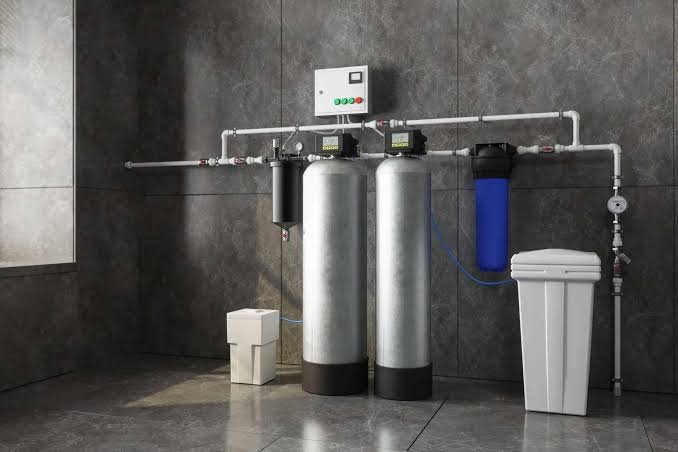
Softening can address hardness. Filtration can target certain particles or other substances depending on the media. Reverse osmosis can provide more extensive reduction of dissolved materials. Other technologies may be appropriate for specialized needs.
The right approach is the one that solves the actual problem without creating unnecessary complexity.
Make Maintenance Easier From Day One
One of the simplest ways to reduce future headaches is to design the installation around maintenance.
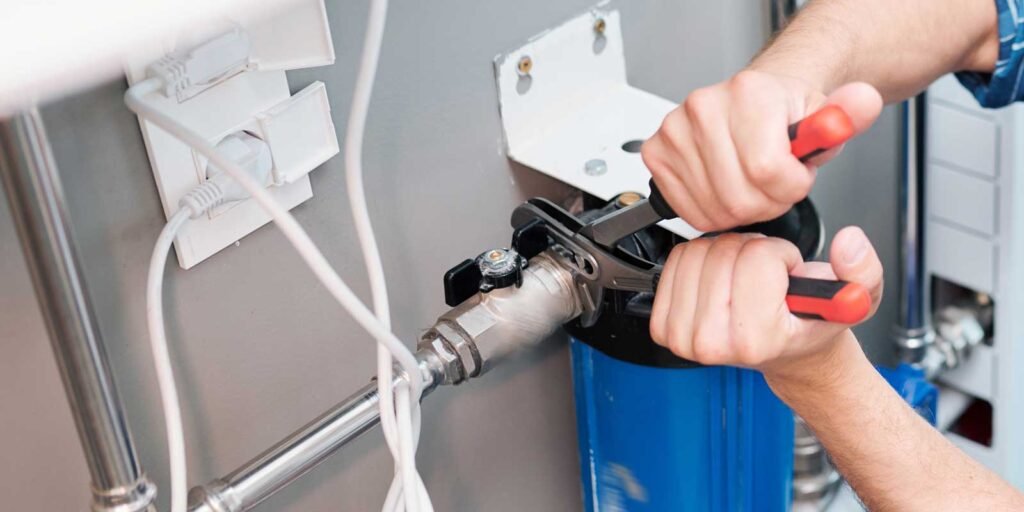
Filters need to be reachable. Shutoff valves should be accessible. Tanks and housings require enough clearance for inspection and replacement. Drainage should be planned properly.
It sounds basic, but accessibility is often overlooked.
A technician shouldn’t have to squeeze between three pieces of equipment just to reach a filter housing. If servicing the system is awkward, maintenance tends to get postponed.
And postponed maintenance has a funny way of becoming expensive maintenance.
Streamlined Maintenance Saves Time
A well-organized system makes routine work much less disruptive.
That’s the value of streamlined maintenance.
Keep service records. Label filters and valves. Note replacement dates. Store equipment manuals where staff can find them. If several systems are installed around the property, make sure someone knows what each one does.
These small habits reduce confusion.
Instead of asking, “When was that filter last replaced?” someone can check the record and know.
For larger facilities, a scheduled maintenance calendar can be especially helpful. Routine tasks become part of normal operations rather than something remembered only after a problem appears.
Water Softening Can Protect the Plumbing and Equipment
Hard water can create mineral scale over time.
The deposits may appear around faucets and fixtures, but the bigger concern in a commercial setting can be the equipment that uses water continuously. Dishwashers, water heaters, coffee equipment, boilers, and other appliances may be affected by scale depending on the hardness level and operating conditions.
Appropriate water softening can help reduce the minerals responsible for hardness.
However, softening isn’t a universal cure for every water-quality problem. It should be selected based on actual water conditions and the needs of the property.
Proper sizing matters, too. A softener that’s too small may regenerate frequently and struggle with demand, while an oversized system can add unnecessary cost.
Filtration Is About the Specific Problem
The word “filtration” sounds simple, but there are many different types of filters.
Sediment filters can capture particles. Carbon-based media may be used for certain tastes, odors, or chemicals. Specialty media can address particular water characteristics.
That’s why choosing a filter based solely on its appearance or price isn’t a great idea.
A business should know what the filter is intended to accomplish, how much water it can handle, and how often the cartridge or media needs service.
The best filtration setup is one that fits the water and the workload.
Don’t Ignore Flow and Pressure
A commercial treatment system doesn’t operate independently of the plumbing around it.
If filters become loaded with sediment, flow can decrease. If several fixtures operate simultaneously, demand can rise sharply. Certain treatment technologies also have specific pressure requirements.
Pay attention to changes.
If water pressure gradually falls, don’t automatically assume the building’s plumbing has suddenly failed. A clogged filter may be the simple explanation.
Checking these things early can prevent unnecessary equipment replacement.
Keep Peak Demand in Mind
Average water consumption can be misleading.
A restaurant might use relatively little water between meals and a tremendous amount during service. A hotel can experience significant demand in the morning. A busy gym may have concentrated usage at certain hours.
Treatment systems should be evaluated for peak flow, not just average daily volume.
Otherwise, equipment may appear perfectly adequate during a quiet inspection but struggle when everyone starts using water at the same time.
That’s when undersizing becomes painfully obvious.
Regular Filter Changes Matter
Filters don’t last forever.
Their service life depends on the type of filter, incoming water quality, flow rate, and total volume processed.
Waiting until water pressure collapses or taste changes dramatically isn’t a good maintenance strategy.
Create a replacement schedule based on manufacturer recommendations and actual operating conditions.
For high-volume commercial applications, monitoring usage can help determine whether filters are reaching capacity sooner than expected.
Maintenance Should Include the Whole System
Changing cartridges is only one part of maintaining water treatment equipment.
Technicians may also need to inspect fittings, valves, tanks, pumps, pressure readings, electrical components, drains, and other parts depending on the system.
For reverse osmosis equipment, membranes and pretreatment components deserve attention. For softeners, regeneration settings and salt levels may need review.
A system can have a brand-new filter and still have another component causing trouble.
Look at the whole setup.
Train Employees to Notice Changes
The people using a facility every day can sometimes spot problems before a technician does.
They may notice that water tastes different, flow seems weaker, equipment sounds unusual, or a small leak has appeared.
Staff don’t need to diagnose the issue.
They simply need to know that unusual conditions should be reported.
A short internal checklist can help: unusual taste, low pressure, visible leaks, strange noises, alarms, or changes in equipment performance.
Early reporting is surprisingly valuable.
Don’t Put Off Professional Service
Some routine tasks are easy for trained staff. Others are better handled by qualified technicians.
Persistent leaks, unexplained pressure changes, treatment failures, sanitation concerns, and recurring water-quality issues deserve proper investigation.
Trying to fix everything by replacing random parts can cost more than a professional inspection.
A technician can look at the system as a whole and determine whether the problem is related to filtration, plumbing, pressure, equipment settings, or the incoming water.
Think About Long-Term Operating Costs
A treatment system has expenses beyond the original purchase.
Replacement filters, membranes, salt, electricity, water usage, service visits, and eventual component replacement all contribute to ownership costs.
When evaluating equipment, ask about those ongoing requirements.
A lower-priced system isn’t necessarily cheaper if its components need frequent replacement. Likewise, a premium system may not provide good value if its extra features aren’t useful for the application.
Look at the full picture.
Plan for Changes in the Business
Commercial properties don’t stay exactly the same.
Businesses expand. Kitchens are renovated. Equipment gets added. Employee numbers change. Production increases.
A treatment system that was correctly sized five years ago may not be ideal today.
If water demand has changed, have the system evaluated rather than assuming it is still operating at its original capacity.
Sometimes a simple adjustment is enough. Other times, additional treatment or equipment may be necessary.
Good Treatment Should Feel Almost Boring
That’s perhaps the best way to judge a commercial water treatment system.
When everything is working properly, nobody should be thinking about it constantly.
The equipment should provide appropriate treatment. Filters should be changed on schedule. Problems should be identified early. Service should happen before failure becomes disruptive.
It isn’t glamorous work. But reliable infrastructure rarely is.
A practical approach combines accurate water testing, properly selected equipment, sensible installation, routine inspections, and clear maintenance records. From there, businesses can avoid many of the little surprises that turn into expensive interruptions.
The goal isn’t to create the most complicated water system possible.
It’s to create one that fits the property, works reliably, and remains manageable year after year.
When maintenance is organized and treatment is matched to actual needs, water becomes what it should be in a commercial operation — dependable background infrastructure that quietly does its job while everyone else gets on with theirs.