Good water treatment isn’t necessarily about having the most complicated system in the basement. In fact, sometimes the simplest solution is the one that makes the most sense. The trick is figuring out what you actually want to improve.
Maybe the water leaves mineral spots on your glasses. Perhaps there’s a faint chlorine taste when you fill a bottle. Or you’re tired of buying cases of bottled water because the tap water never quite tastes right. These are everyday frustrations, but they can point toward very different treatment needs.
Two common approaches are whole-home filtration and point-of-use drinking-water treatment. Both can be useful. They simply solve different problems.
Start by Defining the Goal
Before looking at equipment, ask a basic question: what do you want the water treatment system to accomplish?
If your concern affects every faucet, shower, appliance, and laundry load, treating only the kitchen tap probably won’t be enough. On the other hand, if the main issue is drinking-water taste, installing a large system for the entire property might be unnecessary.
This distinction can save homeowners a surprising amount of money.
A treatment system should be selected around the problem, not around how impressive the equipment looks. More filtration stages don’t automatically mean better water, and a larger system isn’t always the smarter investment.
When Whole-Home Filtration Makes Sense
Whole-home treatment is designed to address water as it enters the property or before it reaches multiple fixtures.
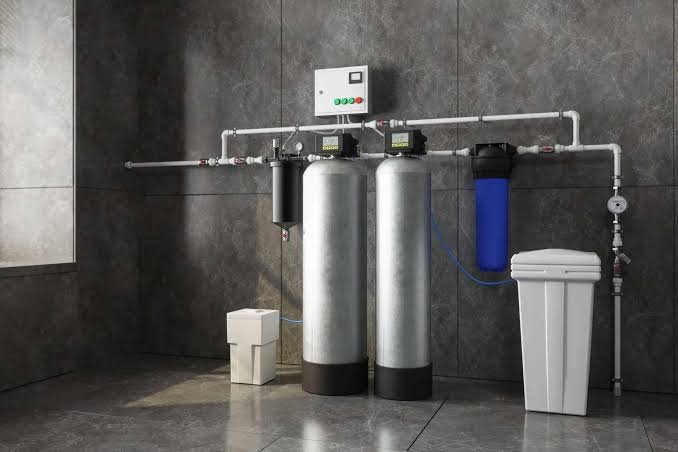
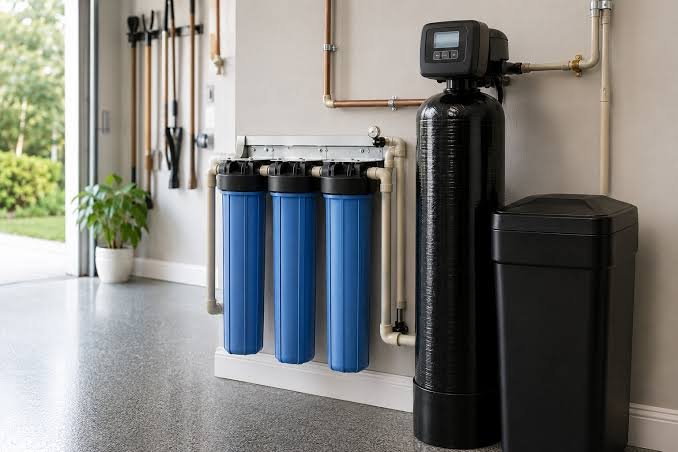
For households dealing with concerns throughout the home, whole home filtration systems can offer a convenient way to provide treated water at numerous outlets. Depending on the filtration technology, these systems may be designed to reduce sediment, chlorine, certain odors, or other specific substances.
The key phrase is “depending on the technology.”
A whole-home filter isn’t automatically designed to remove everything. Carbon, sediment, specialty media, and other filtration methods each have different purposes.
That’s why homeowners should understand what a particular system is certified or designed to reduce before making a purchase.
What Happens at the Kitchen Sink?
Now imagine a different situation.
The shower water is fine. Laundry is fine. Appliances are working normally. Your only real complaint is that the drinking water doesn’t taste as fresh as you’d like.
In that case, a point-of-use system could be more practical.
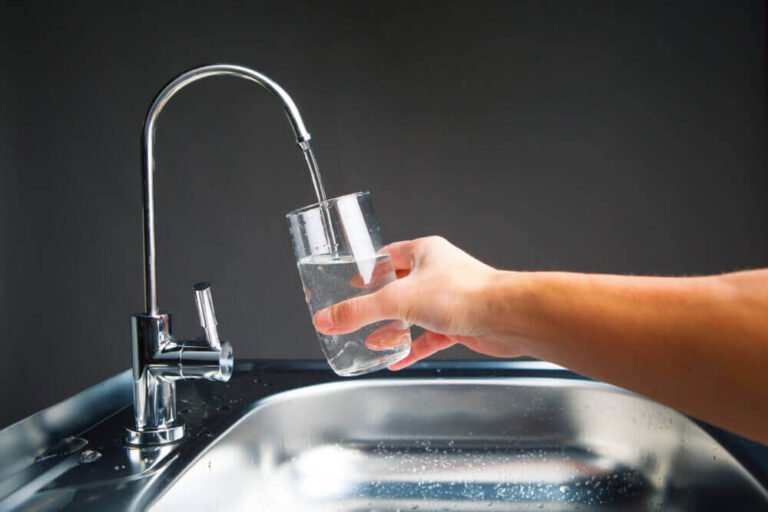
under-the-sink drinking water systems are installed beneath a kitchen sink and treat water delivered through a dedicated faucet. Depending on the design, they may use carbon filtration, reverse osmosis, or other treatment technologies.
The advantage is focus. You’re treating the water you actually drink and use for cooking without necessarily treating every gallon used for showers and laundry.
For many households, that’s a sensible compromise.
Why Taste and Odor Matter
Taste and odor are often the first things people notice about their water.
A slight chlorine taste, metallic note, or unusual odor can make people reach for bottled water even when the tap water itself is otherwise suitable for its intended use.
Carbon filtration is commonly used to improve taste and odor because activated carbon can reduce certain compounds responsible for these sensory characteristics.
But again, it’s important to identify the actual concern first.
If testing shows a different issue, carbon alone may not be the appropriate solution. Water treatment works best when the technology matches the substance or characteristic you’re trying to address.
The Appeal of Bottled-Quality Water at Home
There’s something satisfying about filling a glass from the tap and actually wanting to drink it.
Many homeowners look for treatment options that provide bottled-quality water without the constant expense and waste associated with disposable bottles.
A properly selected drinking-water system can improve taste and reduce certain substances, depending on the technology used. Reverse osmosis systems are often chosen when homeowners want more extensive treatment of dissolved substances.
The result can be more convenient than constantly carrying home cases of bottled water.
Still, “bottled-quality” shouldn’t be interpreted as a technical certification or guarantee. Water quality depends on the source, treatment method, system maintenance, and other factors.
It’s better to focus on measurable treatment performance than marketing language.
Testing Takes the Guesswork Out
Water can look perfectly clear and still have characteristics worth investigating.
That’s why testing is such a useful starting point.
A water analysis can provide information about hardness, pH, iron, sediment, and other parameters depending on the source and reason for testing. If a specific contaminant is suspected, the appropriate laboratory test should be selected for that concern.
Testing also prevents unnecessary treatment.
If hardness is the main problem, you may need a softener rather than a drinking-water filter. If taste and odor are the issue, carbon filtration might be sufficient. If dissolved substances are the concern, another technology may be more appropriate.
The test results help narrow the choices.
Think About Household Water Use
Your daily habits matter when selecting a system.
A family of six has different water demands from a couple living in a smaller home. A household that cooks frequently may use its drinking-water system more heavily than one that rarely prepares meals at home.
For whole-home equipment, flow rate and capacity become especially important.
The system needs to handle normal and peak water demand without creating unnecessary pressure loss. Proper sizing can make the difference between a system that quietly works in the background and one that becomes a constant source of complaints.
Installation Shouldn’t Be an Afterthought
Even good equipment can perform poorly if it’s installed incorrectly.
Whole-home systems need suitable plumbing connections, drainage where required, and enough clearance for future filter changes or service. Under-sink systems need proper connections and enough cabinet space for the equipment and any storage tank.
Think ahead.
If you can’t reach the filter without removing half the contents of the cabinet, maintenance is going to become annoying very quickly.
A professional installer can also check system settings, water pressure, and other details that may affect performance.
Maintenance Keeps Water Treatment Effective
Every filtration system eventually needs attention.
Filter cartridges have replacement intervals. Reverse osmosis membranes have service lives. Some whole-home systems require periodic inspection or media replacement.
Skipping maintenance can gradually reduce performance.
The water may still look fine, which makes the problem easy to overlook. Taste may change slowly. Flow can become weaker. Filters may simply become less effective.
Keep a basic record of replacement dates. It’s a small habit, but it makes ownership much easier.
Look at the Long-Term Cost
The initial purchase price isn’t the only expense worth considering.
Think about replacement filters, service, installation, electricity, water usage, and replacement parts. For reverse osmosis systems, consider membrane replacement and the system’s water efficiency as well.
A low-cost system isn’t necessarily inexpensive over five years.
Likewise, paying more doesn’t guarantee better performance. The right system is the one that provides appropriate treatment without creating unnecessary complexity or expense.
Don’t Buy More Treatment Than You Need
This might be the most important point.
Homeowners sometimes assume that more filtration automatically equals healthier or better water. That’s not necessarily true.
Treatment should have a purpose.
If your problem is localized, localized treatment may be enough. If the issue affects the entire property, whole-home treatment may be more appropriate.
And if testing reveals no meaningful concern, you may not need major equipment at all.
There’s nothing wrong with keeping things simple.
Making the Choice With Confidence
Choosing between whole-home and under-the-sink treatment becomes much easier once you stop thinking about the equipment and start thinking about the water.
What concerns do you have? Where do they occur? What does testing show? How much water does your household use? How much maintenance are you realistically willing to handle?
Answer those questions first.
A whole-home system can provide broad treatment throughout a property, while an under-the-sink system can deliver targeted treatment where drinking and cooking water are most important.
Neither approach is automatically better.
The best choice is the one that fits your home’s water conditions, your daily habits, and your priorities. Once you find that balance, water treatment stops feeling like another complicated household decision and starts feeling like what it should be: a practical improvement that quietly makes everyday life a little easier.