Water quietly supports almost every workplace. Employees fill bottles before a meeting, customers use a restroom, kitchens prepare food, and equipment runs throughout the day. Because water is so ordinary, its importance is easy to overlook.
That usually changes when something goes wrong.
A fountain tastes strange. A dispenser develops an unpleasant odor. Equipment starts showing mineral deposits. A process that depends on purified water suddenly produces inconsistent results. None of these problems are particularly convenient, especially when a business is already juggling a dozen other priorities.
Commercial water treatment isn’t about making every system unnecessarily complicated. It’s about understanding where water is used, what quality is required, and how to keep that quality consistent.
Sometimes that means routine sanitation. Sometimes filtration is enough. In specialized environments, highly purified water may be essential.
The trick is knowing the difference.
Clean Water Requires Ongoing Attention
Installing a treatment system doesn’t mean the water will take care of itself forever.
Commercial environments have constant activity. Fixtures are used frequently, filters collect material, pipes experience changing flow conditions, and equipment can sit unused for periods of time. Even a system that worked perfectly when first installed may need adjustment or maintenance later.
Routine commercial water sanitization can be an important part of maintaining water systems where microbial control and cleanliness are priorities. The exact sanitation approach depends on the equipment, water source, facility, and applicable requirements.
The goal isn’t simply to clean something because it looks dirty. Proper sanitation should be planned around the type of system being maintained and the risks associated with its use.
Drinking Water Fixtures Deserve Attention
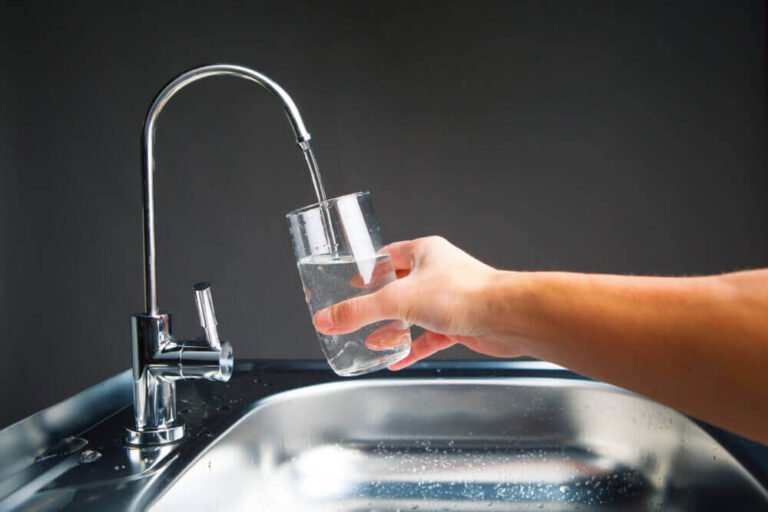
Commercial drinking fountains are often among the most frequently touched water fixtures in a workplace, school, healthcare facility, or public building.
People expect them to be clean, functional, and pleasant to use. A fountain with poor flow, an unusual taste, or visible residue quickly becomes something people avoid.
Commercial water fountains should therefore be included in routine facility maintenance. Cleaning exterior surfaces is only one part of the job. Internal components, filters, drains, and water-contact areas may also require attention depending on the equipment.
Filter replacement is especially important. A filter that has reached the end of its useful life may restrict flow or affect taste and odor.
Keep records of when filters are replaced and when fixtures are serviced. It sounds basic, but simple documentation can prevent maintenance from becoming a guessing game.
Not Every Application Needs the Same Water
One of the biggest mistakes in commercial water treatment is assuming that “clean water” has one universal definition.
A drinking fountain needs water suitable for consumption. A restaurant has food-service considerations. A manufacturing facility may need water with specific chemical characteristics. A laboratory can require far more controlled purity.
The treatment system should reflect the application.
For general drinking water, filtration may be sufficient depending on the source. For more demanding processes, additional purification may be necessary.
This is where testing becomes valuable. Instead of guessing what the water contains, facility managers can establish the characteristics that actually matter and select treatment accordingly.
Deionized Water Has a Specialized Role
Some commercial and industrial processes require water with very low concentrations of dissolved ions.
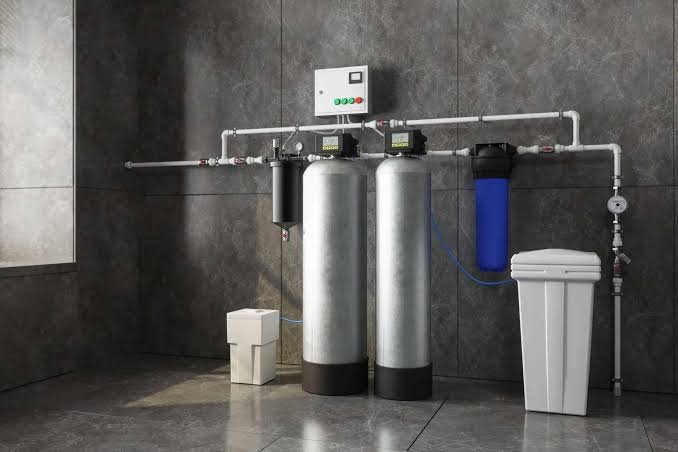
This is where DI resin & deionization water systems can become useful. Deionization uses ion-exchange resins to remove charged dissolved substances from water, producing water with much lower ionic content than ordinary filtered water.
Such systems can be used in applications where mineral content needs to be tightly controlled. Depending on the process, deionized water may be important for laboratory work, manufacturing, electronics, cleaning, or other specialized applications.
But deionization isn’t the answer to every water-quality concern.
DI systems are designed around ionic contaminants. They don’t automatically address every type of impurity, and pretreatment may be needed to protect the resin and improve system performance.
In other words, specialized water deserves specialized treatment.
Start With a Water Analysis
Before choosing equipment, understand the incoming water.
A suitable analysis can provide information about hardness, pH, dissolved solids, iron, manganese, sediment, chlorine, and other characteristics depending on the source and application.
For commercial facilities, the testing process may need to go beyond ordinary household concerns. The water’s intended use should influence what is tested.
For example, a business using water for beverage preparation may focus on different characteristics than a manufacturer using water in a production process.
Testing also creates a baseline. If the water changes later, having previous results gives technicians something useful to compare.
It’s a small investment in information that can prevent a much larger investment in the wrong equipment.
Flow Rate Matters More Than You Might Expect
A treatment system can produce excellent water and still be a poor commercial solution if it can’t keep up with demand.
Imagine a busy office building at lunchtime. Dozens of employees are filling bottles, kitchens are operating, restrooms are being used, and cleaning staff are working throughout the facility.
The water system needs to handle those peaks.
Equipment should therefore be sized around actual flow requirements, not just average daily consumption. Storage tanks, pumps, pressure, pipe sizing, and treatment capacity may all need consideration.
An undersized system can create pressure problems. An oversized system may cost more than necessary.
The right size is the one that fits the operation.
Maintenance Should Be Scheduled, Not Remembered
“Someone will take care of it” isn’t really a maintenance plan.
Commercial water systems need documented schedules for filter changes, inspections, sanitation, resin replacement, and other service tasks as appropriate.
The schedule should also account for how heavily the equipment is used.
A fountain in a busy public facility may need different attention from one in a small office. A deionization system running continuously may require more frequent monitoring than equipment used occasionally.
Regular records make this much easier. Note the service date, work performed, parts replaced, and any observations from the technician.
Over time, those records create a useful history of the system.
Watch for Early Warning Signs
Small changes shouldn’t automatically be ignored.
A drop in water pressure can indicate a clogged filter or another restriction. A sudden change in taste or odor may suggest that filtration or sanitation needs attention. Unexpected changes in purified-water quality could indicate exhausted resin or another system issue.
Early investigation is usually easier than emergency repair.
Employees should also know who to contact when something seems wrong. A simple reporting process can prevent minor issues from sitting unnoticed for weeks.
The people using the water every day are often the first ones to notice something has changed.
Don’t Chase Technology for Its Own Sake
Commercial water treatment can involve impressive equipment, sophisticated controls, and highly specialized purification technologies.
But technology isn’t the goal.
The goal is reliable water that meets the needs of the business.
A small office may need a straightforward filtration and maintenance program. A restaurant might require multiple treatment stages. A laboratory or industrial facility may need tightly controlled purified water.
Buying equipment simply because it has more features can create unnecessary expense and maintenance.
Choose based on water quality, application, flow requirements, operating conditions, and long-term service needs.
Good Water Treatment Works Quietly
The best commercial water systems aren’t usually the ones people talk about every day.
They’re the ones that work.
Drinking fountains provide clean, pleasant water. Filters are replaced before they become a problem. Specialized purification equipment produces consistent water for critical processes. Maintenance happens before failures interrupt operations.
That kind of reliability doesn’t happen by accident.
It comes from testing the water, understanding the application, choosing appropriate equipment, and maintaining it properly.
Water may be an ordinary part of the workday, but the systems behind it deserve thoughtful attention. Get those systems right, and water becomes what it should have been all along—dependable, clean, and quietly doing its job in the background.