Most of us don’t give much thought to the water coming through the tap. It’s there in the morning when you make coffee, in the evening when you wash dishes, and every time someone takes a shower. It becomes part of the background noise of home life.
Until something changes.
Maybe you notice a white ring around the kitchen faucet. Perhaps the shower glass seems to collect spots almost overnight. Your laundry feels different, or the water has developed a faint taste that wasn’t there before. None of these signs should automatically cause alarm, but they are good reasons to pay closer attention.
Water problems aren’t all the same, and that’s where things can get confusing. A treatment system that works well in one house may do very little for another. The best solution starts with understanding what’s actually happening in your water.
Your Water Has a Story
The source of your water matters more than many homeowners realize.
Some properties receive treated municipal water, while others depend on private wells. Groundwater chemistry can vary according to local geology, and household plumbing can influence water quality before it reaches the faucet.
That’s why neighbors can have completely different experiences with their water.
One home might struggle mainly with hardness. Another may have sediment. A third could be dealing with an unpleasant odor. There isn’t a universal filter that solves all of those problems equally well.
Before spending money on equipment, identify the issue.
Testing Takes the Guesswork Out
Clear water isn’t necessarily problem-free, and cloudy water isn’t necessarily dangerous. Appearance tells you something, but not enough.
Water testing can examine characteristics such as hardness, pH, minerals, sediment and, when appropriate, microorganisms or specific contaminants.
Testing is particularly useful for private-well owners, but municipal-water customers can benefit from testing when they notice changes in taste, odor or appearance.
It can also prevent a common mistake: treating a symptom without understanding the cause.
If you’re dealing with scale, for example, you may need to address hardness rather than simply installing a general-purpose filter.
When Whole-House Filtration Makes Sense
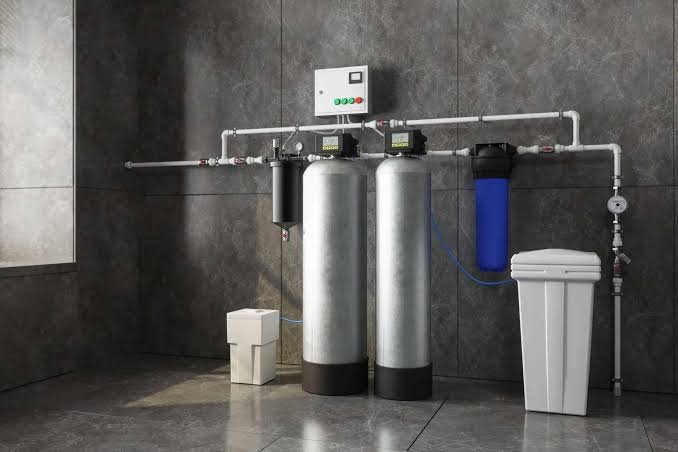
For homeowners who want treated water throughout the property, whole house filtration can be a practical option.
These systems are generally installed at the point where water enters the home, allowing treated water to reach multiple fixtures. Depending on the filter media and design, a system may target sediment, chlorine, certain chemicals, taste or odor.
The benefit is convenience. Instead of installing separate filters at several faucets, treatment happens centrally.
But it’s important to look at the system’s actual specifications. “Whole house” doesn’t mean “removes everything.” Different filters have different capabilities, capacities and limitations.
The treatment should match the water.
Hard Water Is a Different Kind of Problem
Hard water is usually associated with calcium and magnesium. It can be one of those problems that slowly drives homeowners crazy.
White mineral deposits appear on faucets. Showerheads become crusty. Glass doors develop stubborn spots. Appliances that heat water may accumulate scale internally.
Water softening addresses hardness rather than simply filtering particles from the water. Traditional softeners use ion exchange to reduce calcium and magnesium.
The key is proper sizing. A system needs to handle the household’s flow and water usage without creating unnecessary restrictions or maintenance.
If hardness isn’t actually a problem, though, there’s little reason to install a softener just because someone recommended one.
Filtration and Softening Aren’t Interchangeable
This distinction gets lost surprisingly often.
A sediment filter can capture particles. Carbon filtration can help with certain taste, odor and chemical concerns. A softener targets hardness. Reverse osmosis can reduce many dissolved substances.
Each technology has a job.
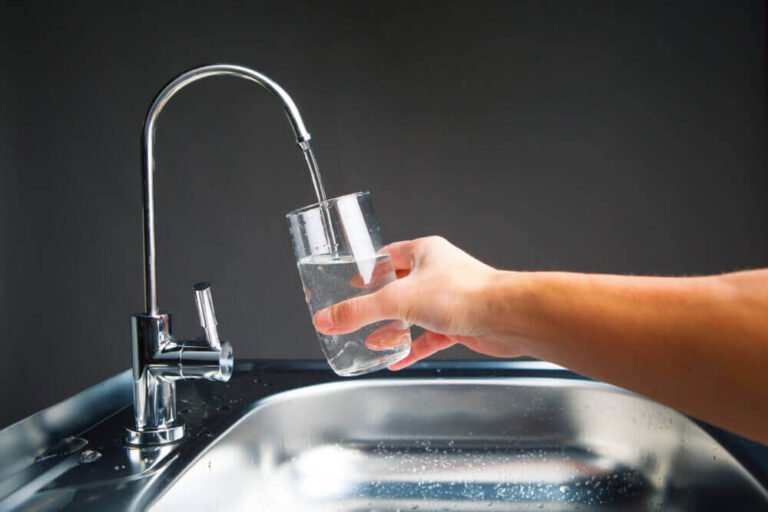
Sometimes a home benefits from combining several treatment methods. A sediment filter might protect downstream equipment, while a softener addresses hardness and a drinking-water system provides additional treatment at the kitchen sink.
But every component should have a reason for being there.
More equipment isn’t automatically better.
Think About Water Pressure Before Installation
Water treatment equipment can affect flow.
Filters create resistance, and that resistance can increase as cartridges collect material. If a system isn’t properly sized, homeowners may notice reduced pressure at times when water demand is highest.
Think about your normal routine. Two showers running at once? Dishwasher filling while someone uses the kitchen faucet? Washing machine operating during the morning rush?
These details matter.
A professional assessment should consider inlet pressure, pipe size, flow requirements and the number of fixtures being served.
Maintenance Is Part of Ownership
Buying a treatment system doesn’t mean you’re finished.
Filters need to be replaced. Softener components require servicing. Reverse osmosis membranes eventually need changing. UV systems have their own maintenance requirements.
Ignoring these tasks can reduce performance and potentially create additional problems.
The easiest solution is to make maintenance part of your normal household routine. Write down installation dates. Set reminders for filter changes. Keep replacement parts available if practical.
It takes only a few minutes to stay organized, and it can save a lot of frustration later.
Businesses Have Different Water Demands
Water treatment becomes even more important in commercial settings.
Restaurants, hotels, laundries, healthcare facilities and manufacturing businesses may use far more water than a typical household. They may also rely on equipment that’s particularly sensitive to water chemistry.
Scale can affect boilers, dishwashers, coffee equipment and water heaters. Sediment can interfere with valves and fixtures. Certain water characteristics may also affect specific industrial processes.
For these properties, commercial water treatment should be designed around actual water use, peak demand and operational requirements.
The right system isn’t necessarily the largest one. It is the one that can consistently handle the building’s needs.
Don’t Forget the Cost of Maintenance
When comparing treatment systems, homeowners and businesses often focus on the installation price.
That’s only part of the picture.
Replacement filters, salt, membranes, electricity, servicing and water consumption can all contribute to the long-term cost.
Ask what routine maintenance involves before buying. How often are filters changed? What do replacements cost? Does the equipment require professional servicing?
A system that’s easy to maintain is often more valuable than one with impressive features but complicated upkeep.
Look at the Plumbing, Too
Sometimes water treatment isn’t the actual answer.
If only one faucet has an unusual taste or discoloration, the fixture or local plumbing may be responsible. If hot water smells different from cold water, the water heater deserves attention.
Treating the entire property without investigating these possibilities can be an expensive way to miss the real issue.
A good assessment considers both the water source and the plumbing system.
Don’t Let Marketing Make the Decision
Water-treatment advertisements often use impressive language: advanced purification, multi-stage protection, maximum performance.
Those phrases can sound reassuring, but they don’t tell you whether a system is right for your property.
Ask specific questions.
What does the equipment remove? What testing supports that claim? What flow rate can it handle? How often does it need maintenance? What happens when the filter reaches capacity?
Clear answers are much more useful than a long list of features.
Better Water Doesn’t Require Overcomplication
The goal of water treatment is fairly simple: address the problems that actually exist and make everyday water easier to live with.
Start with testing. Understand the source. Identify the main concern. Then choose treatment technology based on evidence rather than guesswork.
Some homes need very little treatment. Others may require a combination of filtration, softening or specialized systems.
That’s perfectly normal.
What matters is finding a solution that fits your water, your property and your routine.
When the right equipment is installed and maintained properly, you shouldn’t have to think about it much. You turn on the faucet and get the water you expect. Appliances operate without unnecessary mineral buildup. Showers are easier to clean.
In the end, that’s the real measure of a good water-treatment system — not how complicated it looks, but how quietly it makes life better.