There’s a strange thing about hard water: it rarely causes one huge, obvious problem. Instead, it leaves behind a collection of small annoyances.
A cloudy shower door. White marks around the kitchen faucet. Soap that seems to vanish without producing much lather. A water heater that gradually collects mineral scale. None of these issues feels urgent on its own, so they tend to get pushed down the household to-do list.
Then you clean the bathroom again.
For homeowners dealing with hard water, a properly selected softening system can make those recurring chores less frustrating. More importantly, reducing hardness can help limit mineral buildup in plumbing fixtures and certain water-using appliances.
But there’s a catch: not every softener is equally suited to every home. The real value comes from choosing the right equipment, sizing it correctly, and maintaining it properly.
First, Understand What Hard Water Is
Hard water contains dissolved minerals, particularly calcium and magnesium. These minerals are naturally present in many water supplies.
The issue is less about the existence of these minerals and more about what they can leave behind.
When hard water is heated or evaporates, minerals can form scale. Over time, that scale may accumulate on faucets, showerheads, water heaters, dishwashers, and other surfaces.
Hard water can also make cleaning more difficult because calcium and magnesium interfere with soap’s ability to lather effectively.
Before investing in treatment equipment, however, it makes sense to test the water. Knowing the hardness level helps determine whether softening is actually necessary and what system capacity may be appropriate.
Choosing a System That Fits the Household
Water softeners aren’t one-size-fits-all appliances.
Household size, water hardness, daily consumption, and peak demand all affect the amount of treatment capacity required.
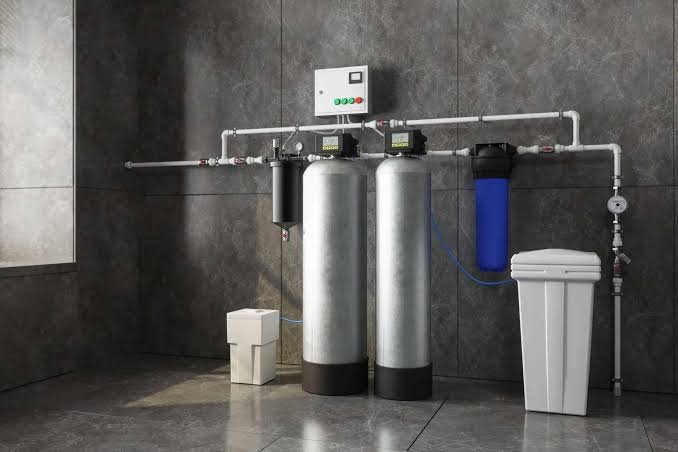
Some homeowners researching premium water treatment equipment may come across kinetico water softeners as an option. Kinetico is known for water treatment systems that use non-electric technology in various applications, which can appeal to homeowners interested in mechanical operation and demand-based performance.
But the brand or model name shouldn’t be the only consideration.
Look at how the system regenerates, how much water and salt it uses, whether the capacity matches your household, and what kind of service is available locally.
The best system is the one that fits the actual conditions of your home.
Why Proper Sizing Matters
Imagine a household with several bathrooms, frequent laundry, and a dishwasher running most evenings. Now imagine installing a softener designed for a much smaller household.
The system may struggle to keep up with demand.
On the other hand, installing equipment far larger than necessary can add unnecessary upfront and operating costs.
Proper sizing considers water hardness and household water consumption together. A professional water treatment provider can use those details to determine a suitable capacity.
It’s not the most exciting part of shopping for a softener, but it may be one of the most important.
Efficient Regeneration Can Make a Difference
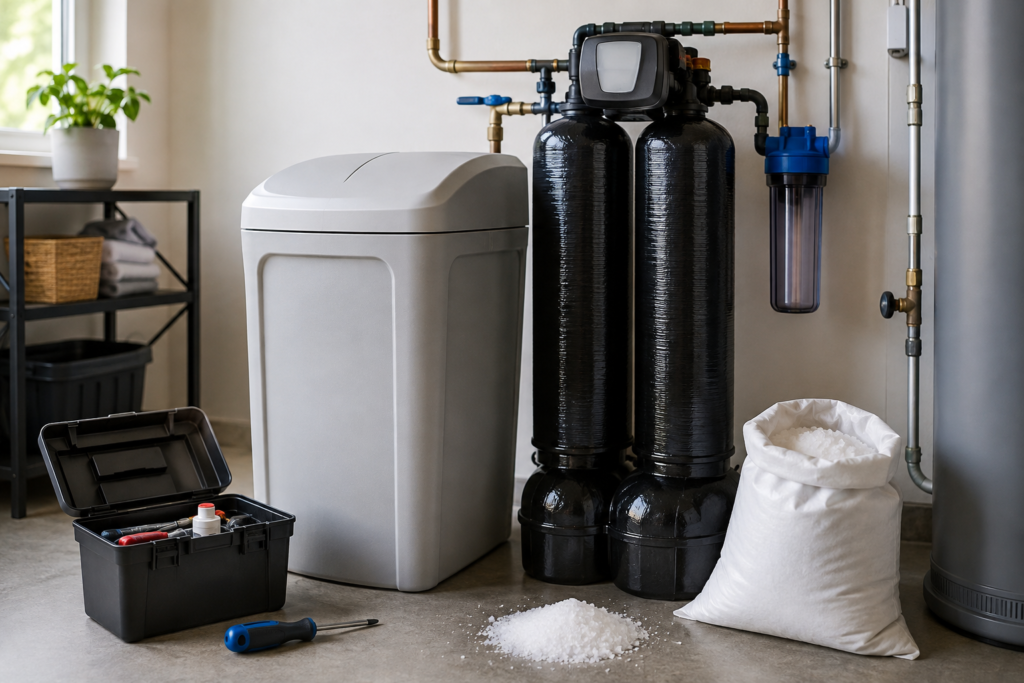
Traditional ion-exchange softeners need to regenerate the resin periodically. During this process, a brine solution is typically used to restore the resin’s ability to remove hardness minerals.
Older systems may operate on a fixed schedule. More advanced systems can monitor water consumption and regenerate based on actual demand.
That distinction can matter.
If your family is away for a week, water consumption drops. A demand-based system can respond accordingly rather than following an arbitrary calendar.
When properly configured, efficient regeneration can help reduce unnecessary salt and water consumption.
Think Beyond the Purchase Price
A water softener is a long-term household investment.
The purchase price matters, but it isn’t the whole story. Consider installation, salt consumption, water use during regeneration, replacement parts, routine servicing, and the expected lifespan of the equipment.
A system that costs slightly more initially may provide better long-term value if it’s efficient and straightforward to maintain.
Conversely, a cheap system isn’t necessarily inexpensive over time if it requires frequent repairs or consumes excessive amounts of salt.
This is where looking at total ownership costs becomes useful.
Lower Maintenance Costs Come From Good Decisions
One of the simplest ways to achieve lower maintenance costs is to prevent avoidable problems in the first place.
Proper installation is part of that. So is correct sizing. So is keeping the system configured for your actual water conditions.
A softener that is constantly overloaded may require more frequent regeneration and experience greater operational stress. A poorly maintained brine tank or control valve can also affect performance.
Regular inspection isn’t glamorous, but it can catch small issues before they become expensive repairs.
In other words, maintenance begins before something breaks.
Hard Water Can Affect Appliances
Water treatment isn’t only about making the shower feel nicer.
Hard-water scale can accumulate inside appliances that heat or use water. Water heaters are an obvious example, but dishwashers, washing machines, coffee equipment, and other devices may also encounter mineral deposits.
The extent of the effect depends on the water hardness, appliance design, operating conditions, and maintenance habits.
Reducing hardness can help limit one source of mineral buildup, although it doesn’t eliminate the need for normal appliance care.
Think of softening as one part of the maintenance strategy, not a replacement for every other maintenance task.
Maintenance Costs Depend on More Than Repairs
When homeowners calculate maintenance costs, they often think only about what happens when equipment fails.
That’s too narrow.
Ongoing costs can include replacement filters where applicable, salt, professional service, cleaning, replacement components, and water consumed during regeneration.
A system’s operating efficiency can therefore have a meaningful impact on long-term ownership.
Ask providers to explain typical maintenance requirements before purchasing. How often should the equipment be inspected? Which components wear out? What does routine service include? Are replacement parts readily available?
Clear answers can make budgeting much easier.
Don’t Ignore Changes in Performance
Your water softener usually gives you clues when something isn’t right.
If scale suddenly starts appearing again on faucets, dishes develop spots, or the water feels noticeably different, investigate.
The problem might be low salt, incorrect settings, excessive water usage, a mechanical issue, or another component that needs attention.
Don’t automatically assume the entire system needs replacement.
Sometimes a simple adjustment or repair can restore normal operation.
Softening Isn’t the Same as Filtration
Another common misunderstanding is expecting a softener to solve every water-quality issue.
It won’t.
Water softeners primarily address hardness. They aren’t designed to remove every contaminant, sediment, odor, or microorganism.
If your water has additional concerns, you may need other treatment technologies. Depending on test results, that could include carbon filtration, sediment filtration, reverse osmosis, or ultraviolet treatment.
Start with testing rather than buying equipment based on assumptions.
Service Support Matters
A water treatment system can remain in your home for many years. Having reliable support during that time is valuable.
Ask whether the provider offers installation, maintenance, troubleshooting, replacement parts, and warranty service.
Local availability can matter, too. If a component eventually fails, waiting weeks for someone to diagnose or repair it isn’t particularly convenient.
Good support may not be the first thing you think about when shopping, but it can become one of the most appreciated features later.
A Smarter Investment in Everyday Comfort
Hard water isn’t usually a problem homeowners want to think about every day. That’s precisely why a well-designed treatment system should work quietly in the background.
Start with a water test. Understand the hardness level. Choose equipment that matches household demand. Pay attention to regeneration settings and ongoing operating requirements.
Then maintain the system.
The payoff isn’t just cleaner-looking faucets. It can mean less scale, easier cleaning, better-performing fixtures, and fewer hard-water-related headaches around the home.
Most importantly, think long term. The cheapest system at the beginning isn’t always the most economical choice over several years.
A properly sized, efficiently operated, well-maintained softener should simply become part of the house—doing its job without demanding much attention.
And honestly, that’s what you want from household equipment. You shouldn’t have to think about it every morning. You should just notice that the water behaves better, the cleaning takes a little less effort, and one more household chore has quietly become less annoying.