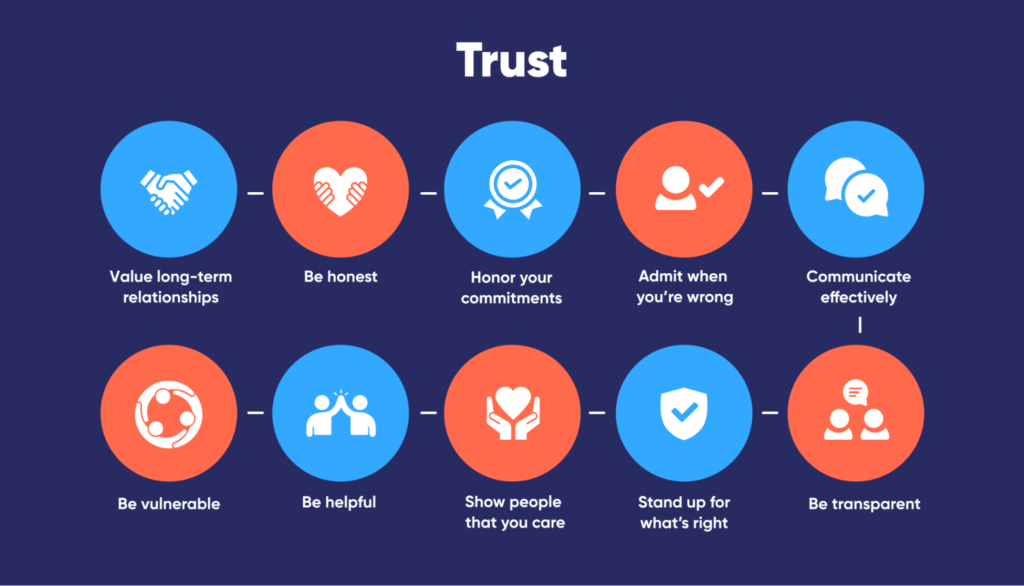
Nobody hands you trust along with your new manager title. You have to actually earn it — often from people who were your peers just weeks ago, some of whom might have wanted the role themselves. Figuring out how to build trust as a leader is honestly one of the hardest, least talked-about parts of stepping into management for the first time.
I’ve noticed new managers often overcorrect — either trying too hard to be liked, or swinging the other way into unnecessary authority. Neither works particularly well.
Trust Isn’t Built Through Authority — It’s Built Through Consistency
Quick answer: As a new manager, trust is built primarily through consistency between your words and actions over time — not through your title, your confidence, or how hard you try to be liked.
Be Honest About What You Don’t Know Yet
This might feel counterintuitive, but pretending to have all the answers as a new manager usually backfires. Teams can tell when someone’s bluffing, and it erodes trust faster than admitting “I’m not sure yet, let me find out” ever would.
Picture a new team lead in Jaipur who inherited a team mid-project. Instead of pretending to fully understand every technical detail immediately, she openly asked questions in her first few weeks — and the team respected that far more than if she’d faked expertise she didn’t have.
Follow Through on Small Commitments First
Big promises are easy to make and hard to verify quickly. Small commitments — following through on what you said you’d do by Friday, remembering details from a conversation — build trust faster because they’re immediately verifiable.
- Do what you say you’ll do, even for small things
- If you can’t follow through, communicate that early, not after the deadline passes
- Keep a system to track your own commitments so nothing slips
Listen More Than You Speak Early On
I’ve noticed the new managers who build trust fastest spend their first month mostly listening — understanding how the team actually works, what’s frustrating them, what’s working well — before making changes just to assert their presence.
Give Credit Publicly, Address Problems Privately
Quick answer: A simple but powerful trust-building habit is giving credit to team members publicly for their contributions, while addressing mistakes or performance issues privately and respectfully — never the reverse.
Has this ever happened to you — watching a manager take credit for a team’s work, or criticize someone publicly? It’s one of the fastest ways to destroy trust, and teams remember it for a long time.
Be Transparent About Decisions, Even Unpopular Ones
When you make a decision the team doesn’t love, explain the reasoning honestly rather than just issuing it as a directive. Teams don’t need to agree with every decision, but they do need to understand the reasoning behind it to keep trusting your judgment.
[link to related guide about giving constructive feedback here]
Protect Your Team When It Matters
New managers earn significant trust quickly by advocating for their team — pushing back on unreasonable deadlines from above, defending team decisions to other departments, or standing up for a team member facing unfair criticism.
Admit Mistakes Openly
I’ll be honest — this one’s uncomfortable, but it matters more than almost anything else on this list. When you make a mistake as a manager, own it clearly rather than deflecting or quietly correcting it without acknowledgment. It signals that honesty matters more to you than looking perfect.
Be Consistent Across the Whole Team
Playing favorites, even unintentionally, damages trust across the entire team, not just with the person being treated unfairly. Consistency in how you communicate, delegate, and give feedback across everyone builds a much stronger foundation.
Give It Time — Trust Isn’t Instant
Quick answer: Building genuine trust as a new manager typically takes several months of consistent behavior — there’s no shortcut, and expecting immediate trust often leads to frustration and overcorrection.
FAQ
Q: How long does it typically take to build trust as a new manager? Generally a few months of consistent, honest behavior — trust builds gradually rather than through any single gesture or announcement.
Q: Should a new manager make changes immediately or wait? Waiting to understand the team and existing processes before making major changes generally builds more trust than moving too fast.
Q: How do I build trust with a team that expected someone else to get the role? Acknowledge the situation honestly if it comes up, focus on consistent, fair actions rather than trying to convince them verbally, and give it time.
Q: Is being liked the same as being trusted as a manager? No — being liked and being trusted are related but different; trust is built through reliability and honesty, while being liked is more about personality and rapport.
Q: What’s the fastest way to lose a team’s trust? Taking credit for team achievements or being inconsistent between what you say and what you actually do.
Q: Should new managers admit when they don’t know something? Yes — admitting uncertainty, followed by genuinely finding the answer, builds more credibility than pretending to have all the answers.
Conclusion
Figuring out how to build trust as a leader isn’t about a dramatic gesture or a perfectly confident first team meeting — it’s about small, consistent, honest actions repeated over months. Listen first, follow through on commitments, give credit generously, and own your mistakes openly. Do that consistently, and trust builds itself, even without you having to ask for it directly.
Suggested alt text: “New manager having a one-on-one conversation with a team member” Suggested alt text: “Team meeting where a new leader is building trust with staff”