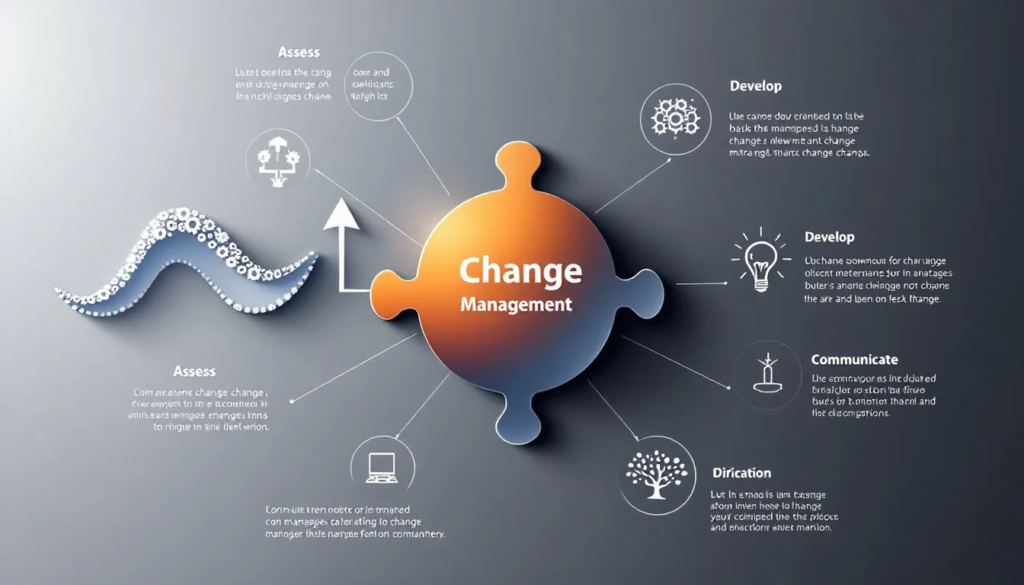
Growth sounds like an unambiguously good problem to have — until the processes that worked for a 10-person team start collapsing under the weight of 60 people, and nobody quite knows how to fix it without breaking something else. That’s where real change management strategies matter, not as corporate jargon, but as a genuine survival skill.
I’ve noticed companies often wait too long to manage change intentionally — they just let it happen chaotically and then wonder why morale drops.
What Change Management Actually Means
Quick answer: Change management is the structured approach to preparing, supporting, and guiding people through organizational changes — new processes, tools, structures, or strategies — in a way that minimizes disruption and resistance.
Why Change Efforts Fail More Often Than They Succeed
A lot of change initiatives fail not because the change itself was wrong, but because it was poorly communicated or rolled out too abruptly. People resist change less because they hate the new thing and more because they feel blindsided by it.
Picture a mid-sized company in Rajasthan switching from a manual invoicing process to new software, announced with a single email the week before rollout. Confusion and resistance followed — not because the software was bad, but because nobody had time to understand why the change was happening or how to adapt.
Communicate the “Why” Early and Often
- Explain the specific problem the change is solving, not just the change itself
- Share the reasoning well before the actual rollout, not the week of
- Repeat the message through multiple channels — one email isn’t enough
Involve Key People Before Announcing the Change Broadly
Quick answer: Involving influential team members or department leads early in the planning process — before a company-wide announcement — builds internal advocates who can help ease resistance once the change rolls out broadly.
I’ve noticed changes land far better when a few respected team members were part of shaping the rollout, rather than everyone hearing about it cold at the same time.
Roll Out Gradually Where Possible
Big-bang changes across an entire company simultaneously tend to create more chaos than phased rollouts. Testing a change with one team or department first surfaces problems while the stakes are still manageable.
[link to related guide about corporate hierarchy and structure here]
Expect and Plan for Resistance
Resistance isn’t a sign the change is wrong — it’s a normal part of the process. Has this ever happened to you — assuming resistance meant you’d made a mistake, when really it just meant people needed more time and clarity to adjust?
- Create space for people to voice concerns without dismissing them immediately
- Address the most common objections directly and honestly
- Give people a genuine channel to ask questions throughout the transition
Provide Real Support During the Transition
Training, clear documentation, and accessible support during the early weeks of any change dramatically reduce frustration. Rolling out a new system without adequate training almost guarantees resistance and errors, regardless of how good the system actually is.
Measure Progress, Not Just Completion
Track how the change is actually landing — are people using the new process correctly? Is productivity dipping temporarily as expected, or is it a sign something’s genuinely broken? Regular check-ins during the transition catch problems early.
Celebrate Early Wins
Quick answer: Highlighting small, early successes during a change process — even minor ones — builds momentum and helps skeptical team members see tangible proof the change is working, rather than just taking leadership’s word for it.
Give It Time to Actually Stick
New habits and processes take weeks, sometimes months, to fully embed. Reverting to old habits under pressure is common in the early transition period — consistent reinforcement, not just a one-time announcement, is what makes change genuinely stick.
FAQ
Q: Why do most change management efforts fail? Poor communication and rushed rollouts are the most common reasons — people resist feeling blindsided more than they resist the change itself.
Q: How long does organizational change typically take to fully embed? It varies by scale, but meaningful behavioral change often takes several months of consistent reinforcement, not just a single announcement.
Q: Should every employee be involved in planning a change? Not everyone, but involving key influencers and department leads early significantly improves how the change is received company-wide.
Q: How do I handle strong resistance to a necessary change? Address specific concerns directly and honestly rather than dismissing them, and give people a genuine channel to express doubts throughout the process.
Q: Is gradual rollout always better than an immediate full rollout? Generally yes for larger or more complex changes, though very small or simple changes may not need a phased approach.
Q: What role does leadership play in successful change management? Leadership visibility and consistent communication throughout the process are critical — change initiatives that leadership seems disengaged from tend to lose momentum quickly.
Conclusion
Solid change management strategies aren’t about forcing a new process through regardless of pushback — they’re about communicating clearly, involving the right people early, and supporting the team through the inevitable bumps. Growth will keep breaking old processes; that’s simply what growth does. Managing that change thoughtfully is what keeps a growing company’s culture — and its people — intact along the way.
Suggested alt text: “Team meeting discussing organizational change and new processes” Suggested alt text: “Manager presenting change management plan to employees”