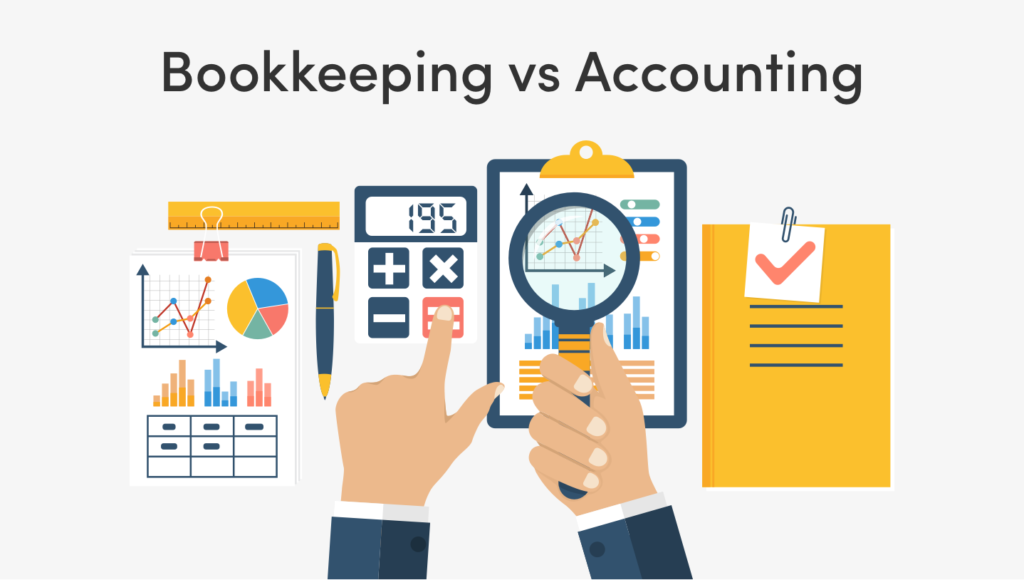
I can’t count how many times I’ve heard small business owners use “accounting” and “bookkeeping” interchangeably, right before hiring the wrong person for the job. The accounting vs bookkeeping confusion is understandable — they’re related, and often done by the same person in small businesses — but they’re genuinely different roles with different purposes.
Let’s clear this up properly, because getting it wrong can actually cost your business real money down the line.
The Core Difference in One Sentence
Quick answer: Bookkeeping is the day-to-day recording of financial transactions, while accounting involves interpreting, analyzing, and using that recorded data to guide business decisions and ensure compliance.
Think of bookkeeping as collecting the raw ingredients, and accounting as actually cooking the meal with them.
What Bookkeeping Actually Involves
Bookkeeping is the administrative, transactional side of managing finances. It’s about accuracy and consistency, not analysis.
- Recording daily sales, purchases, and expenses
- Managing invoices and tracking payments received and made
- Reconciling bank statements against recorded transactions
- Maintaining payroll records
- Organizing receipts and financial documentation
Picture a small retail shop owner in Jaipur logging every sale, every supplier payment, and every expense into a ledger or software at the end of each day. That’s bookkeeping — precise, routine, essential.
What Accounting Actually Involves
Accounting takes that recorded data and turns it into something useful for decision-making. It’s a higher-level, more analytical function.
- Preparing financial statements (profit & loss, balance sheet, cash flow statement)
- Analyzing financial performance and trends over time
- Tax planning and filing compliance
- Budgeting and financial forecasting
- Advising on financial strategy and business decisions
Quick answer: An accountant typically interprets financial data to answer questions like “should we expand,” “can we afford this hire,” or “how do we reduce our tax liability” — questions bookkeeping alone can’t answer.
Why Small Businesses Often Confuse the Two
I’ve noticed the confusion mostly comes from the fact that many small businesses combine both roles into one person, especially early on — often the owner themselves, or a single hired bookkeeper handling both. That’s completely fine at a small scale, but it’s worth understanding when the business has genuinely outgrown that combined approach.
When You Need Just a Bookkeeper
If your business is early-stage with relatively simple transactions, a bookkeeper (or bookkeeping software) is often sufficient to keep records accurate and organized. This keeps costs manageable while the business is still finding its footing.
[link to related guide about basic accounting principles here]
When You Need an Actual Accountant
Has this ever happened to you — tax season arrives and you realize your records, while accurate, don’t actually tell you anything useful about whether the business is genuinely healthy? That’s usually the signal you need accounting expertise, not just bookkeeping.
- Filing complex tax returns or navigating GST compliance
- Making major financial decisions (loans, expansion, hiring)
- Preparing for investor conversations or audits
- Strategic tax planning to legally reduce liability
Qualifications Typically Differ Too
Bookkeepers generally need strong organizational skills and familiarity with accounting software, but don’t necessarily require formal accounting certification. Accountants, particularly those handling tax filing and compliance, typically hold formal qualifications (like CA in India) due to the regulatory and advisory nature of the work.
Can Software Replace Either Role?
Modern accounting software has automated a lot of basic bookkeeping tasks — automatic bank feeds, invoice generation, expense categorization. But it hasn’t replaced the analytical judgment an accountant brings, particularly for tax strategy and financial decision-making.
Cost Considerations for Small Businesses
Quick answer: Bookkeeping services are generally less expensive than accounting services, since they involve routine data entry rather than the specialized analysis and compliance expertise accountants provide — many small businesses use a bookkeeper for daily needs and an accountant periodically, such as at tax time.
FAQ
Q: Can one person handle both bookkeeping and accounting? Yes, especially in small businesses — many owners or hired professionals handle both, though larger or more complex businesses often benefit from separating the roles.
Q: Do I need an accountant if I use accounting software? Software helps automate recording and basic reporting, but it doesn’t replace the strategic advice and compliance expertise a qualified accountant provides.
Q: Is bookkeeping cheaper than hiring an accountant? Generally yes — bookkeeping is more routine and administrative, while accounting requires specialized expertise that typically costs more.
Q: When should a growing business hire a dedicated accountant? Once transactions become complex, tax obligations grow, or you’re making significant financial decisions like loans or expansion, a dedicated accountant becomes genuinely valuable.
Q: What software is commonly used for small business bookkeeping? Popular options include Tally, Zoho Books, and QuickBooks, though the right choice depends on business size and specific needs.
Q: Does every business legally require an accountant? Not necessarily for very small or simple operations, but most growing businesses benefit significantly from at least periodic accountant involvement, particularly for tax filing.
Conclusion
Understanding accounting vs bookkeeping isn’t just semantic — it affects who you hire and what you can reasonably expect from them. Bookkeeping keeps your records accurate day to day; accounting turns those records into decisions you can actually act on. Most small businesses need both eventually — the key is knowing which one you need right now, and not paying for expertise you don’t yet require, or worse, missing expertise you genuinely do.
Suggested alt text: “Bookkeeper organizing receipts and financial records” Suggested alt text: “Accountant reviewing financial statements and tax documents”